The grid is under pressure. Is your facility protected?

The North American grid is entering a period of tightening reliability. Thirteen out of 23 assessment areas are expected to face resource adequacy challenges over the next ten years, according to the North American Electric Reliability Corporation. At the same time, demand is rising faster than at any other point in the past two decades, while dispatchable generation continues to retire.
13 23
Assessment areas at risk across North America
9 15
Assessment areas at risk in the U.S.
+ 245 GW
Winter peak demand
growth
+ 244 GW
Summer peak demand growth
- 105 GW
Projected peak seasonal retirements

Where Risk Is Rising

Select a market to see what’s affecting reliability risk
Reliability risk is not uniform across the United States. Select any highlighted region on the map below to see what’s driving the risk between now and 2030, and what it means for your operations.
High Risk

Texas (ERCOT)

Texas (islanded grid) · Risk onset 2029
Why Risk is Rising
01ERCOT is electrically isolated — zero interstate import fallback
02Rapid population and industrial growth accelerating peak demand
03Extreme weather events (heat & freeze) creating compounding vulnerability
04Inverter-based resource growth complicates grid stability management
Operational Exposure
Islanded
Grid interconnect
2029
Risk onset
Multi-season
Extreme weather risk
↑↑ High
Demand trajectory
Key Takeaway
Rapid growth in large loads is expected to surpass future resource additions, prompting new curtailment and reliability measures.
High Risk

Midcontinent (MISO)

Midwest · Risk onset 2028
Why Risk is Rising
01Industrial reshoring adding significant new demand load
02Coal plant retirements eliminating dispatchable generation capacity
03Solar & battery replacements increase weather-dependent variability
04Reserve margins tightening as load growth outpaces new builds
Operational Exposure
Coal exit
Generation shift
2028
Risk onset
Summer
Peak stress window
Growing
Industrial demand
Key Takeaway
Generator retirements and rising demand exceed new capacity additions; timelines for replacement resources are uncertain.
High Risk

PJM

Mid-Atlantic & Midwest · Risk onset 2029
Why Risk is Rising
01Data center expansion driving the fastest load growth in years
02Dispatchable retirements outpacing new capacity additions
03Limited import capability — cannot rely on neighboring grids
04Winter peak stress during early morning & evening demand hours
Operational Exposure
High
Capacity mkt pressure
2029
Risk onset
Winter
Peak stress window
Limited
Import backup
Key Takeaway
Load growth, driven by data centers and electrification, outpaces new generation with limited ability to rely on imports.
High Risk

Northwest

WECC-Northwest and WECC-Basin · Risk onset 2029
Why Risk is Rising
01Hydropower variability worsening with prolonged drought cycles
02 Electrification and AI data centers rapidly lifting baseline demand
03Thermal retirements reducing available dispatchable backup
04Transmission constraints limiting inter-regional import flexibility
Operational Exposure
Drought
Weather dependency
2029
Risk onset
Winter
Peak demand window
Hydro
Primary risk driver
Key Takeaway
Reliability gaps cascade in drought years when snowpack and reservoir levels fall below average.
Elevated Risk

Southwest Power Pool (SPP)

South-Central · Elevated risk onset 2026
Why Risk is Rising
01Declining reserve margins increasing exposure to variability and outages
02Dependence on wind generation raises vulnerability during low-output periods
03Load growth outpacing replacement of retiring thermal capacity
04Limited import flexibility during regional stress events
Operational Exposure
Wind Variability
Primary risk driver
2026
Risk onset
Multi-season
Exposure window
Declining
Reserve margins
Key Takeaway
Declining reserve margins and dependence on wind generation increase exposure to variability and outages.
Elevated Risk

Southeast

SERC Region · Elevated risk onset 2027
Why Risk is Rising
01Coal retirements outpacing new firm capacity across the Carolinas
02Solar replacements provide no output during highest-risk winter morning hours
03Data center and industrial load adding thousands of megawatts of new demand
04Growing natural gas dependence creating fuel supply exposure during extreme winter events
Operational Exposure
Coal exit
Generation shift driver
2027
Risk onset
Winter mornings
Peak stress window
Growing
Gas dependency
Key Takeaway
Coal retirements and surging demand from data centers and industrial growth are tightening reserve margins across the Southeast, with winter morning hours emerging as the highest-risk period.
Elevated Risk

New York (NYISO)

New York · Elevated risk onset 2026
Why Risk is Rising
01Retirement of aging peaking units creating localized capacity constraints
02Continued load growth adding pressure to already tight summer margins
03Limited transmission into the city during peak events
04Transition away from dispatchable generation increasing weather dependency
Operational Exposure
Peaker exit
Capacity gap driver
2026
Risk onset
Summer
Peak stress window
Constrained
Transmission
Key Takeaway
Retirement of aging peaking units and continued load growth create localized capacity constraints.
Elevated Risk

New England (ISO-NE)

New England · Elevated risk onset 2029
Why Risk is Rising
01Heavy reliance on natural gas combined with pipeline capacity constraints
02Extreme winter cold events expose vulnerability in gas supply delivery
03Wind and solar buildout adds variability without guaranteed dispatch
04Aging generation retiring without sufficient firm replacement capacity
Operational Exposure
Gas pipes
Primary constraint
2029
Risk onset
Winter
Peak stress window
Cold snaps
Trigger events
Key Takeaway
Heavy reliance on natural gas combined with pipeline constraints creates vulnerability during extreme winter conditions.
Emerging Risk

Southwest

WECC-Southwest (AZ, NM, NV) · Risk onset 2034
Why Risk is Rising
01Demand growing at 3.9% annually — the fastest rate in the Western Interconnection
02Coal retirements accelerating without confirmed firm replacement capacity
03Aging thermal fleet increasing forced outage risk during peak summer heat
04Gas supply vulnerable to winter cold snap curtailments across the region
Operational Exposure
Coal exit
Generation shift driver
2034
ARM falls below RML
Summer
Peak stress window
3.9% annually
Demand growth rate
Key Takeaway
The fastest-growing demand region in the West is on a collision course with accelerating coal retirements — the timeline to act is longer, but the structural gap is already forming.
Emerging Risk

California (CAISO)

WECC-California · Risk onset 2030+
Why Risk is Rising
01Aging thermal retirements leaving gaps in firm, dispatchable backup capacity
02Solar-heavy grid creates steep evening demand ramps with no firm coverage
03Wildfires and extreme heat stress transmission during peak summer periods
04Electrification driving 2.4% annual demand growth with 4,993 MW of new large loads forecast through 2035
Operational Exposure
Aging thermal
Fleet retirement driver
2030+
Risk onset
Summer evenings
Peak stress window
Wildfire / Heat
Trigger events
Key Takeaway
Structural conditions are building — thermal retirements, rising electrification demand, and evening supply gaps — making near-term resource decisions critical to staying ahead of reliability risk.
game-iocn
PJM

A Market Entering a Period of Tightening Reliability

PJM serves more than 67 million people across 13 states and the District of Columbia. It faces the sharpest convergence of rising demand and retiring generation in its history. Data center buildout in Northern Virginia, Pennsylvania, and Ohio is pushing load growth to levels not seen in years, while dispatchable coal and gas units continue exiting the market.

PJM’s scale makes the challenge harder. During peak demand or extreme weather, it cannot assume that neighboring grids will have surplus power available to import, especially when those regions may be under stress at the same time. As a result, more of PJM’s reliability requirement has to be met internally.

For energy-intensive facilities in PJM, reliability planning is shifting from contingency-based backup strategies to continuous, on-site energy strategies.

And PJM's tightening margins are part of a broader trend across North American markets where reliability risk is quickly shifting from a regulatory concept to an operational reality.

growth
Fastest load growth in years: Data center expansion across the mid-Atlantic is driving demand at rates not seen in PJM's recent history.
dispatchable
Dispatchable retirements: Coal and gas units are retiring faster than replacement dispatchable capacity can be added to the queue.
import
Limited import capability: PJM's grid size and structure limit its ability to draw from neighboring systems during stress events.
winter-stress
Winter stress exposure: Early morning and evening demand peaks during extreme cold events represent growing reliability risk.
top-pattern
organization-icon
Operational Implications

What This Means for Energy-Intensive Organizations

As grid conditions shift nearly everywhere, organizations are experiencing a broader range of reliability-related impacts.
Outages
Outages
Outages
Periods of grid stress can increase the likelihood of full interruptions, particularly during extreme weather or peak demand events.
power-quality
Power Quality Events
Voltage fluctuations, frequency deviations, and short-duration disturbances impact sensitive equipment and processes.
demand-management
Curtailment and Demand Management 
Utilities and grid operators are increasingly calling on large energy users to reduce load during peak periods.
cost-volatility
Cost Volatility 
Cost Volatility 
Differences in supply-demand dynamics can introduce variability in energy pricing, capacity costs, and peak demand charges.
backup-planning
Backup Planning
Backup Planning
Traditional emergency-only systems like diesel backup generators are no longer adequate for extended events, and limited load coverage leaves critical systems exposed.
bottom-pattern
energy-icon-1

What To Do About It

Three Approaches to Energy Resilience 

As the grid reliability risk becomes structural rather than occasional, the gap between reactive backup and integrated on-site infrastructure widens. The question is no longer whether you need a plan, but rather whether your plan matches the scale of what NERC is projecting.

Organizations are approaching resiliency planning at three distinct levels. Each offers a different degree of protection and operational control.

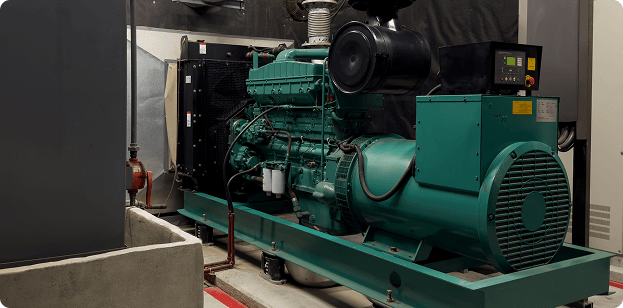
Traditional Backup (Reactive)

This is typically a diesel generator or other similar energy backup.
  • Covers limited portions of facility load
  • Designed for infrequent, emergency-only use
  • No participation in energy markets
  • No power conditioning capability
  • Fuel logistics and emissions constraints
energy-backup
Exposure risks
As grid stress increases, facilities may face greater exposure to outages, curtailment, and operational disruptions. Traditional diesel backup typically protects only mission-critical loads, leaving broader operations exposed to voltage sags, brief power interruptions, and other grid-related disruptions.

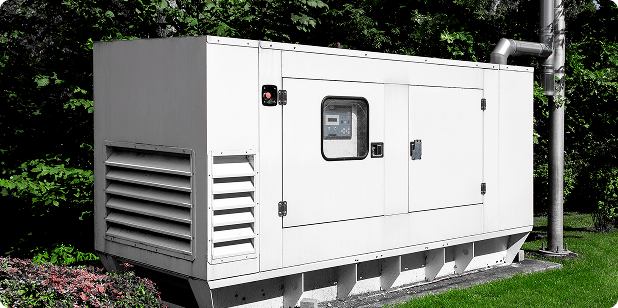
Generator + UPS (Partial Mitigation)

This is backup generation paired with an uninterruptible power supply.
  • Provides instantaneous protection for sensitive equipment and mission-critical loads
  • Bridges short interruptions and generator startup
  • Typically covers only a portion of total facility load
  • Leaves broader facility operations dependent on grid stability
  • Limited ability to support extended full-facility outages or participate in market opportunities
generator-ups
Exposure risks
Protects a portion of operations but leaves the majority of the facility exposed during high-risk periods, like during curtailment and scarcity pricing events that tightening reserve margins produce.

Integrated On-Site Utility (Proactive)

A more advanced approach combines generation, storage, and intelligent controls into a unified system with Virtual Utility®.
  • Instantaneous, full-load pickup
  • Grid-forming capability for stable, independent operation
  • Prime-rated natural gas generation
  • High-C LiFePO4 energy storage for rapid response
  • Power conditioning for seamless, no-interruption transitions
  • Continuous synchronization with the utility
  • Ability to participate in energy and capacity markets (where available)
  • 24/7 monitoring and optimization through platforms like Grove365®

site-utlity
The difference
Virtual Utility® doesn't wait for the grid to fail. Instead, the integrated Grove365® anticipates grid stress, price spikes, and curtailment events and dispatches your R3Di® System automatically. Your facility runs on its own utility-grade infrastructure, making the public grid an option and not a dependency.

Built for a Changing Grid 

Two structural challenges significantly influence grid reliability: tightening capacity during peak demand, and increasing power quality variability as inverter-based resources replace traditional generation.

Virtual Utility® is built specifically for this environment. The R3Di® System, the heart of Virtual Utility, provides continuous grid-forming power that doesn't depend on the utility for frequency reference, while the proprietary platform Grove365® monitors the grid in real-time and dispatches on-site assets before an event reaches your operations. Together, these components provide for seamless transitions between grid-connected and independent operation with no interruption to facility load.


changing-grid
The foundation: Integrated generation and storage

A self-contained, turnkey power platform that operates continuously in sync with the grid or fully independent from it.

Unlike standby generators that activate after an outage, the R3Di® System runs in prime mode and is continuously conditioned and ready for instantaneous, full-load transfer with no interruption.

  • Grid-forming capability for stable operation
  • Prime-rated natural gas generation
  • High-C LiFePO4 battery storage for rapid response

The intelligence layer: Monitoring, optimization, and control

Grove365® provides continuous visibility into facility performance, grid conditions, and market signals.

Through real-time monitoring and optimization, it enables intelligent dispatch of on-site assets based on operational priorities—including uptime, cost management, and emissions goals.

  • Real-time monitoring and control
  • Performance optimization across assets
  • Support for demand response and market participation

Take Control of Your Energy Strategy

Grid conditions are shifting in ways that already impact operations in major markets. Take control and plan ahead. Schedule a discovery call with e2Companies. We’ll walk through your current setup, your goals, and what’s possible for your facility.