How can a business keep refrigeration, HVAC, elevators, safety systems, and other essential equipment running during a power outage?
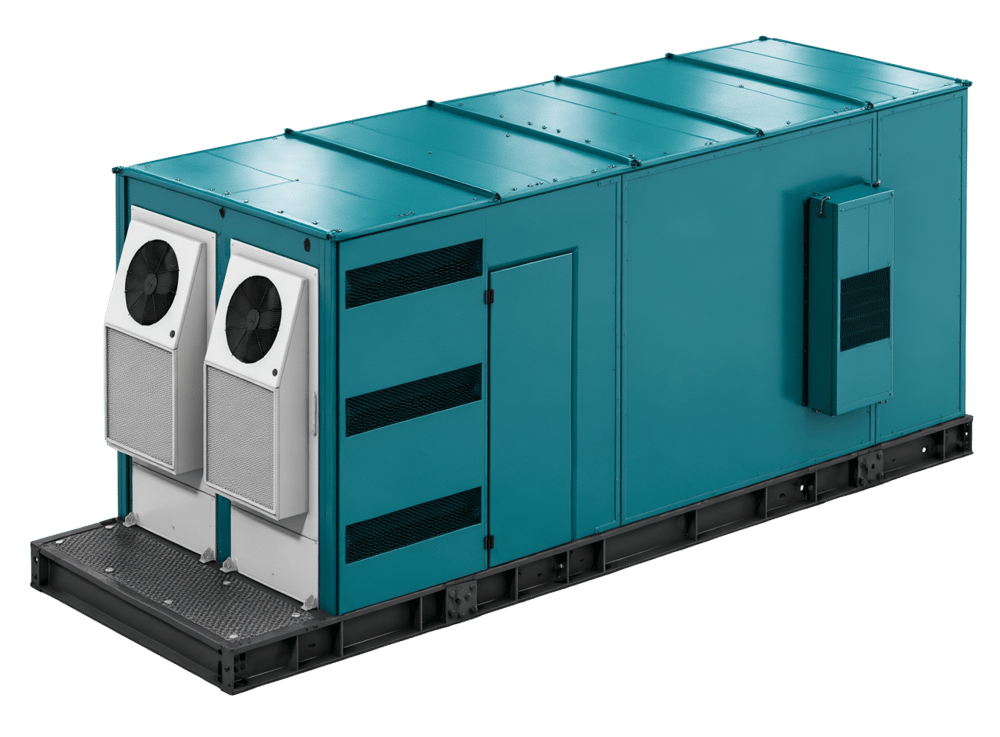
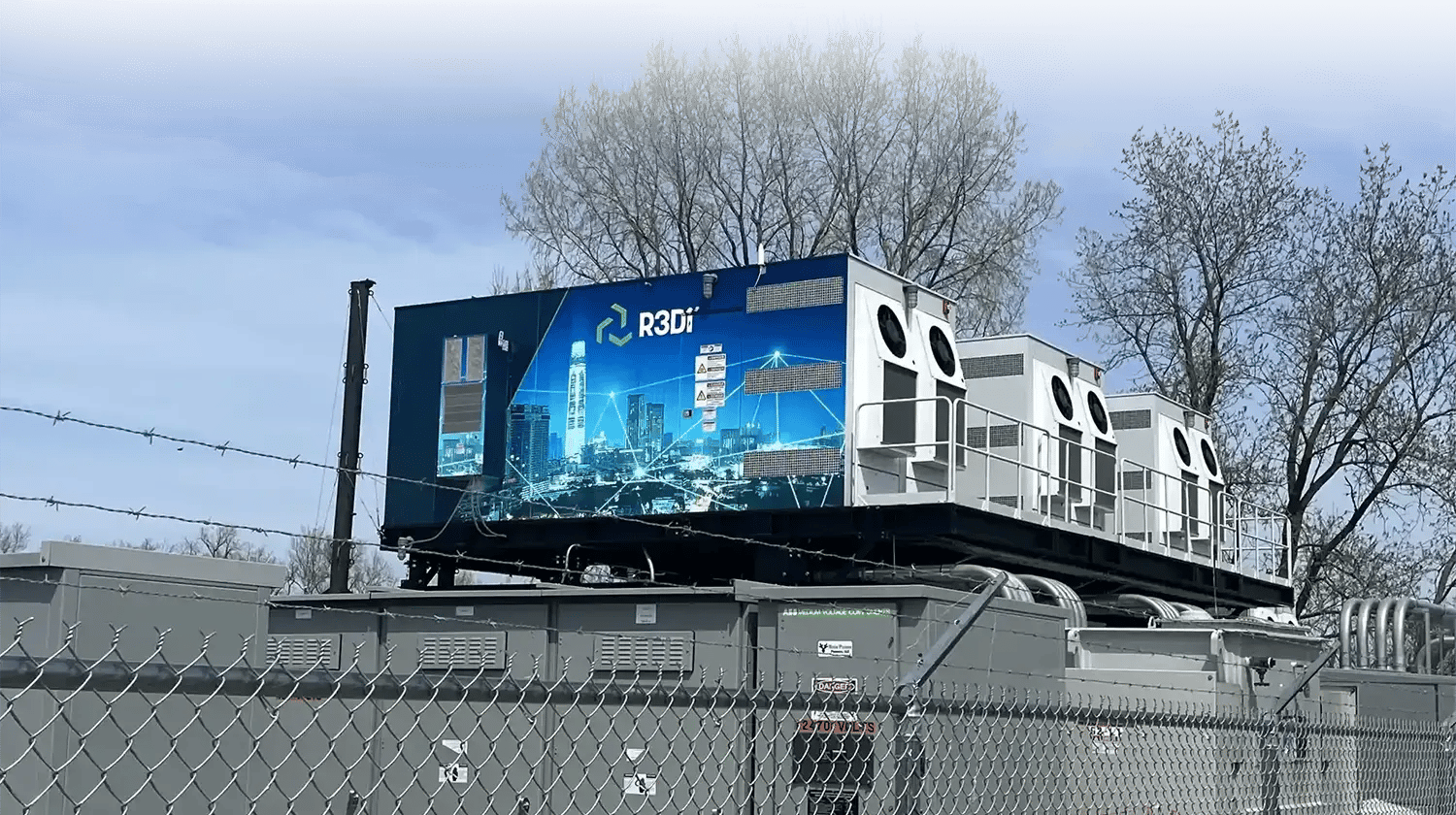
A business can use onsite generation and battery storage to supply power as soon as the grid fails and continue operating throughout an extended outage. R3Di® combines both capabilities in one system. Its battery responds immediately, while its natural-gas generator provides power for longer periods. When sized and configured for the facility’s needs, R3Di can support essential systems such as refrigeration, HVAC, elevators, lighting, security, building controls, and resident services.
How does R3Di protect equipment from power surges, voltage drops, and other electrical problems?
R3Di® continuously conditions electricity before delivering it to connected equipment. Its double-conversion technology helps smooth out voltage drops, surges, frequency changes, and other disturbances that can damage equipment or cause unexpected shutdowns. This is especially valuable for refrigeration, automation, security, communications, point-of-sale systems, and building controls. By providing stable, consistent power, R3Di can reduce equipment disruptions, product losses, operating delays, and difficult restart procedures.
Can a business add more power for expansion, new equipment, or EV charging without waiting for major utility upgrades?
Yes. R3Di® can provide additional power directly at a facility, reducing dependence on new utility capacity. Its modular design starts at one megawatt and allows businesses to add units as their needs grow. This can support building expansions, additional refrigeration, new equipment, increased occupancy, or EV charging without relying entirely on utility upgrades. Every installation still requires an evaluation of the site, electrical demand, fuel supply, permitting, and local regulations.
How can R3Di and Grove365 help a business lower energy costs while maintaining reliable backup power?
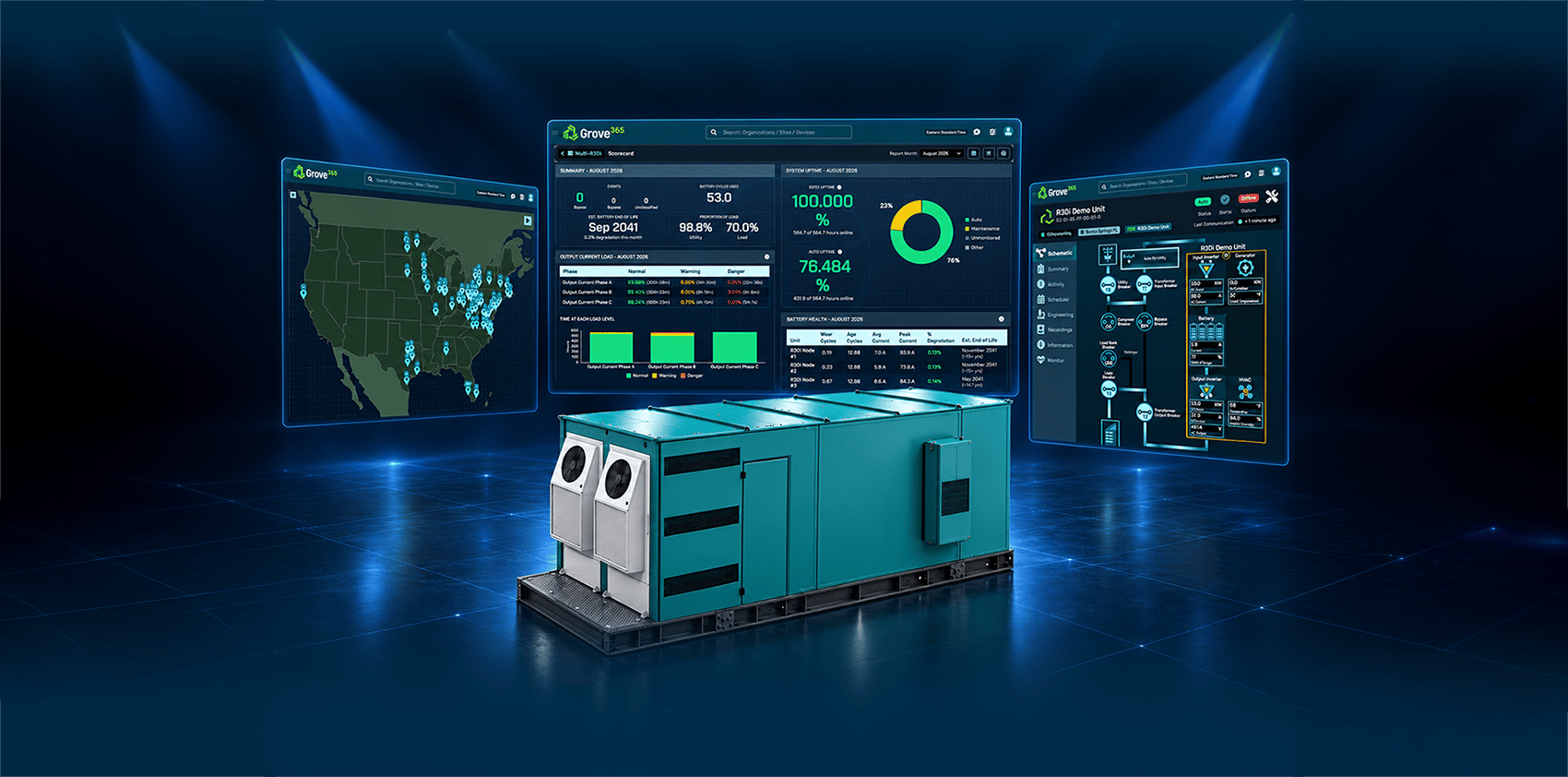
R3Di® supplies onsite power, while Grove365® monitors the facility’s equipment, energy use, grid conditions, weather, and market prices. Together, they can determine when it makes sense to use grid electricity and when to use onsite power. This can help businesses reduce peak-demand charges, avoid selected high-cost periods, identify equipment problems, and participate in eligible utility programs—while keeping stored and generated power available to support the facility when reliability is threatened.
How does R3Di compare with traditional backup generators and battery systems in reliability, operating time, emissions, space requirements, and long-term cost?
Traditional generators can operate through extended outages but do not provide power instantly or continuously condition electricity. Standalone batteries respond quickly but have limited operating time. R3Di® combines fast-response battery storage, continuous power conditioning, and long-duration natural-gas generation in one compact system. It can support all connected loads rather than only selected equipment and produces fewer key air pollutants than comparable diesel generation. Actual cost, emissions, space, and maintenance benefits depend on the facility and system design.

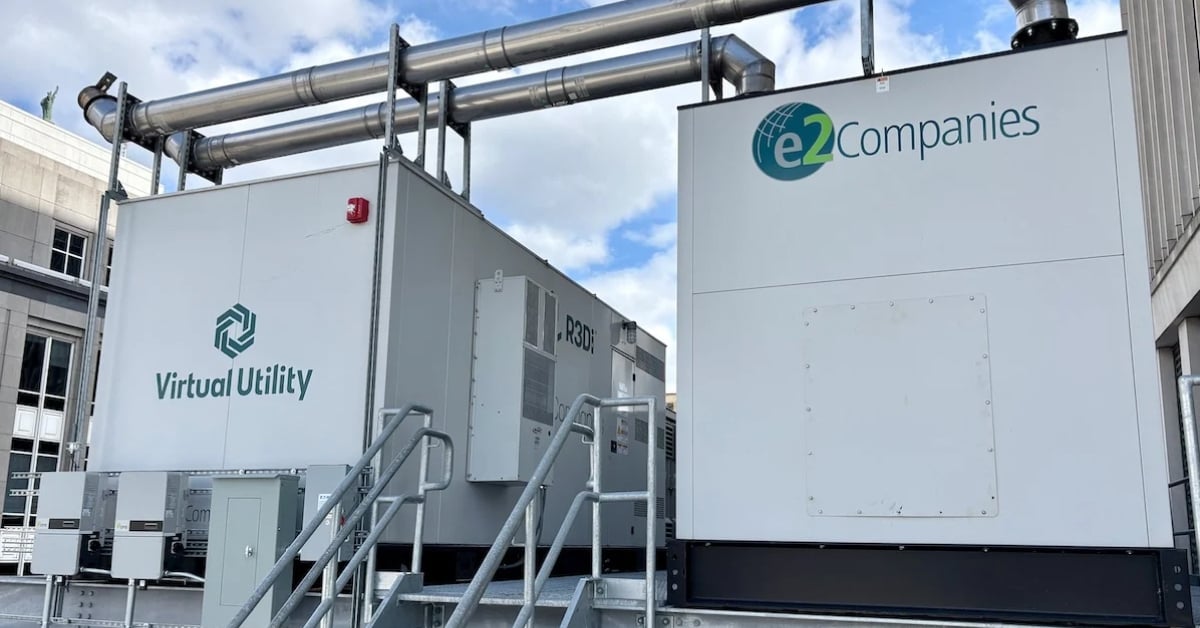 Partner Spotlight: How 34 Group Is Building Community and Resiliency In Western New York
 See how on-site power can improve your facility’s reliability, control, and performance.
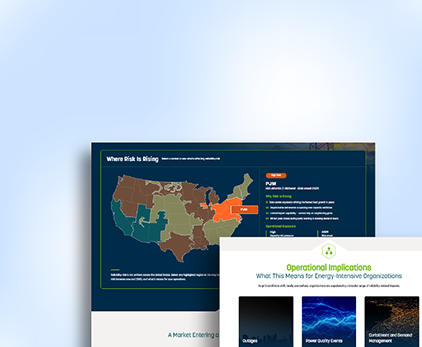 Get a clearer view of regional grid risk, operational exposure, and the path forward.