UL 1778 Certified Power Infrastructure Built for AI-Scale Demand

One platform for power quality, energy storage and sustained on-site operation.

Key Outcomes for Data Centers

  • Fault Ride-Through
  • Load Smoothing
  • Ramp-Rate Control
  • Power Quality
  • Sustained Backup

Keep Compute Running Through Grid Disturbances

Ride through brief voltage dips and grid faults with stable power that helps protect sensitive equipment and keep workloads online. 

e2_Rath

Turn Volatile Demand Into Steady Power

Buffer rapid AI load swings, reducing the impact of sudden spikes and drops on upstream power infrastructure. 

e2_Rath

Manage How Quickly Demand Changes

Control how quickly demand reaches the grid or onsite generation, giving power sources time to respond as compute loads change. 

e2_Rath

Deliver Power Your Equipment Can Depend On

Condition incoming power to maintain stable voltage and frequency and reduce disturbances that can disrupt sensitive IT equipment. 

e2_Rath

Keep Operating When the Grid Goes Down

Bridge the transition to onsite generation and support continued operation through extended grid outages. 

e2_Rath
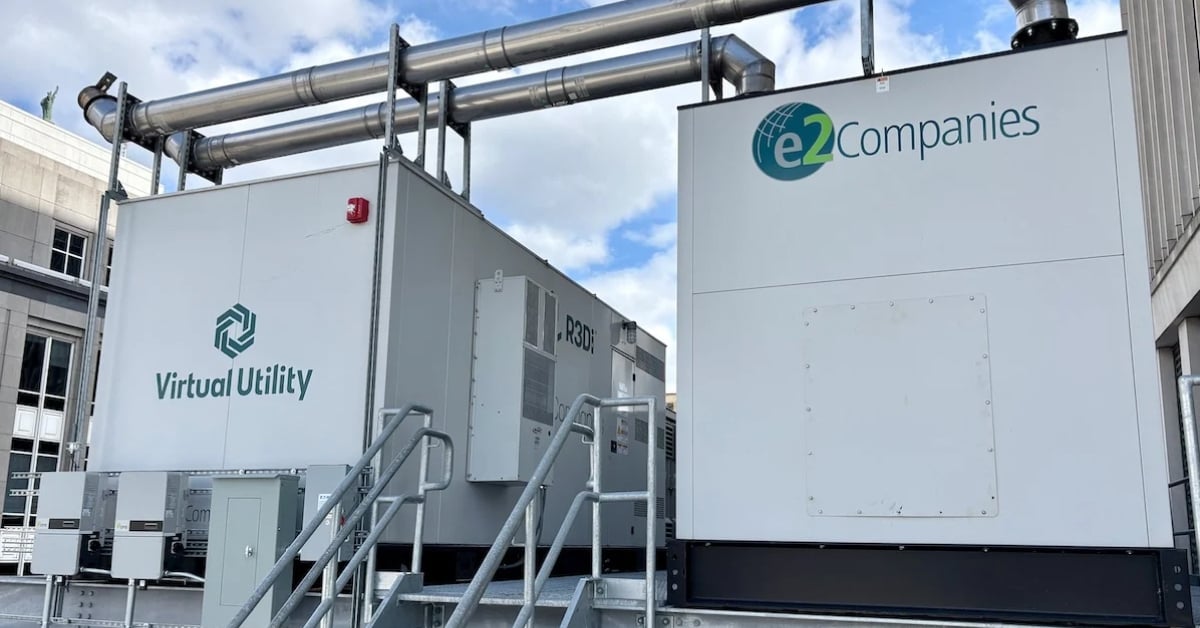
Built around the R3Di®, our architecture integrates UPS-grade power protection, high-power energy storage, switchgear and isolation transformers together in one coordinated, grid-forming power system.
It continuously conditions power, responds instantly to disruptions, and seamlessly transitions the facility to sustained on-site power.
Legacy
r3di

Technical Specifications

System Rating
3 MVA / 3 MW at PF 1.0
Voltage
480V, 3-phase; additional voltages supported via isolation transformers
Power Quality
<2% output THD at nominal voltage
Full-Load Battery Runtime
Approx. 18 minutes without generator support
Overload Capability
110% for 10 min. / 125% for 10 sec.
Transient Response
Up to 3C for 2 min. / 1C for 6 min.
Processing Rate
8,000 voltage + current samples/sec.
Output Frequency
60 Hz ±1%
Legacy-Space-Saving2
R3Di-Space-Saving2

High-Density Power Without the Extra Footprint

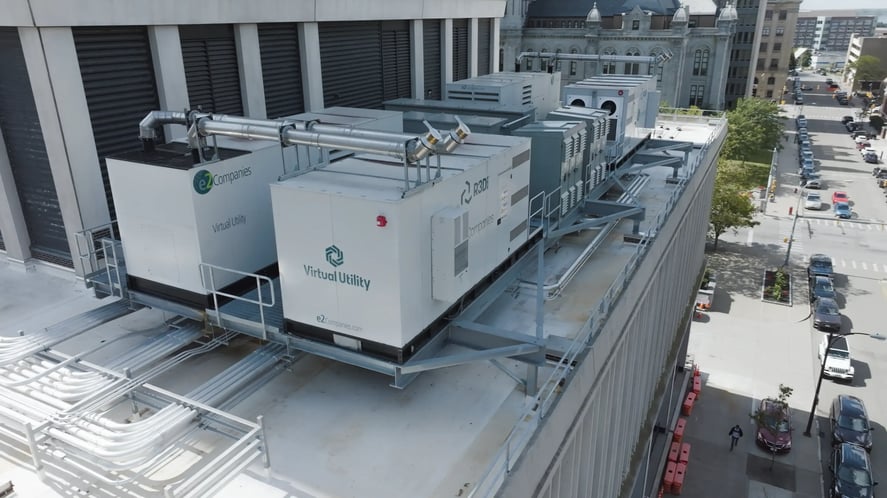
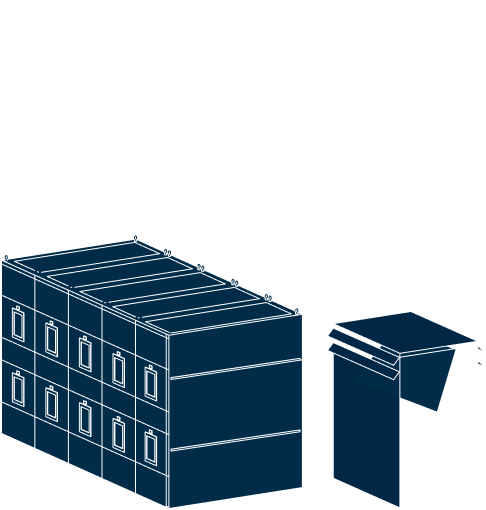
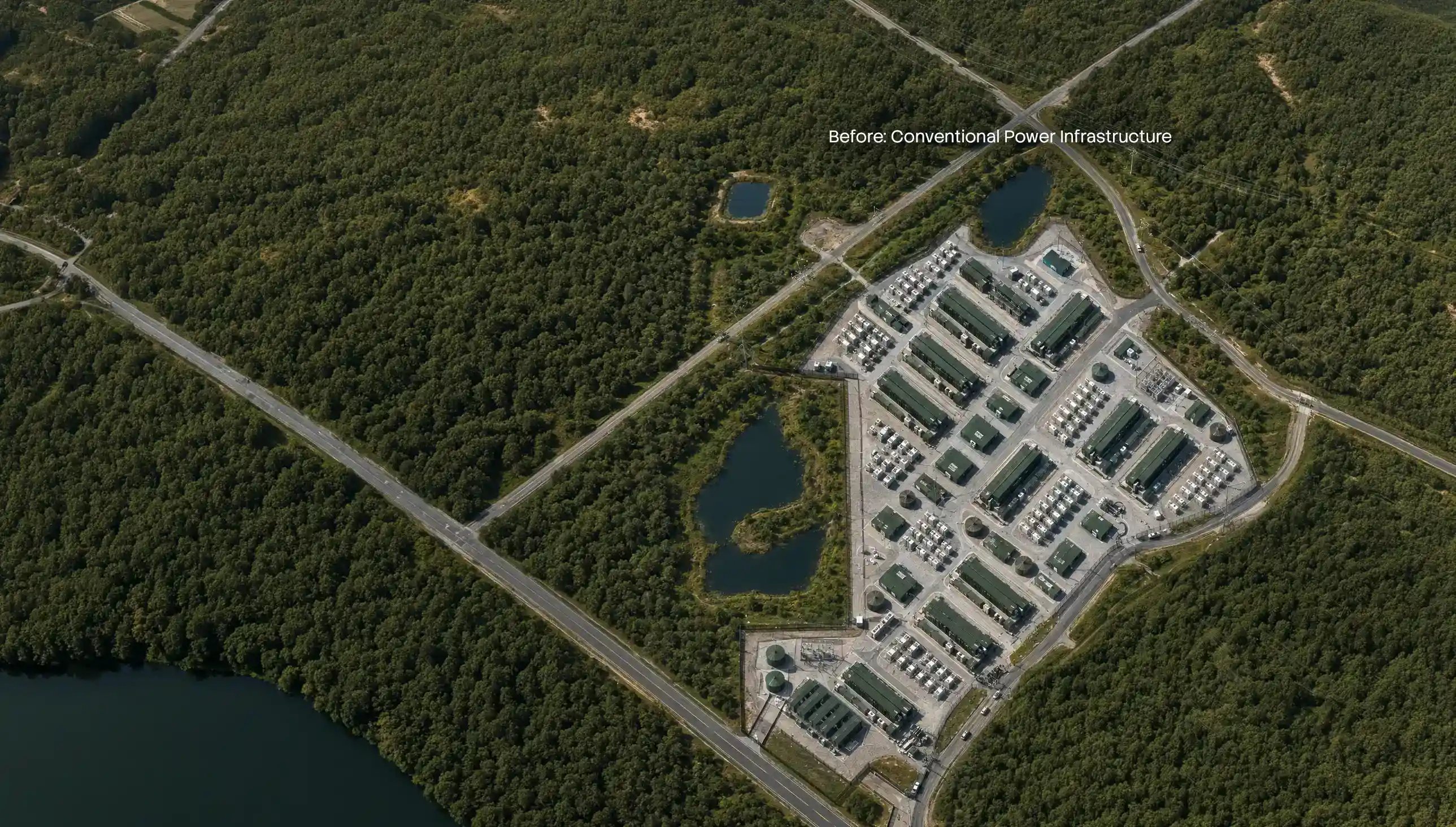
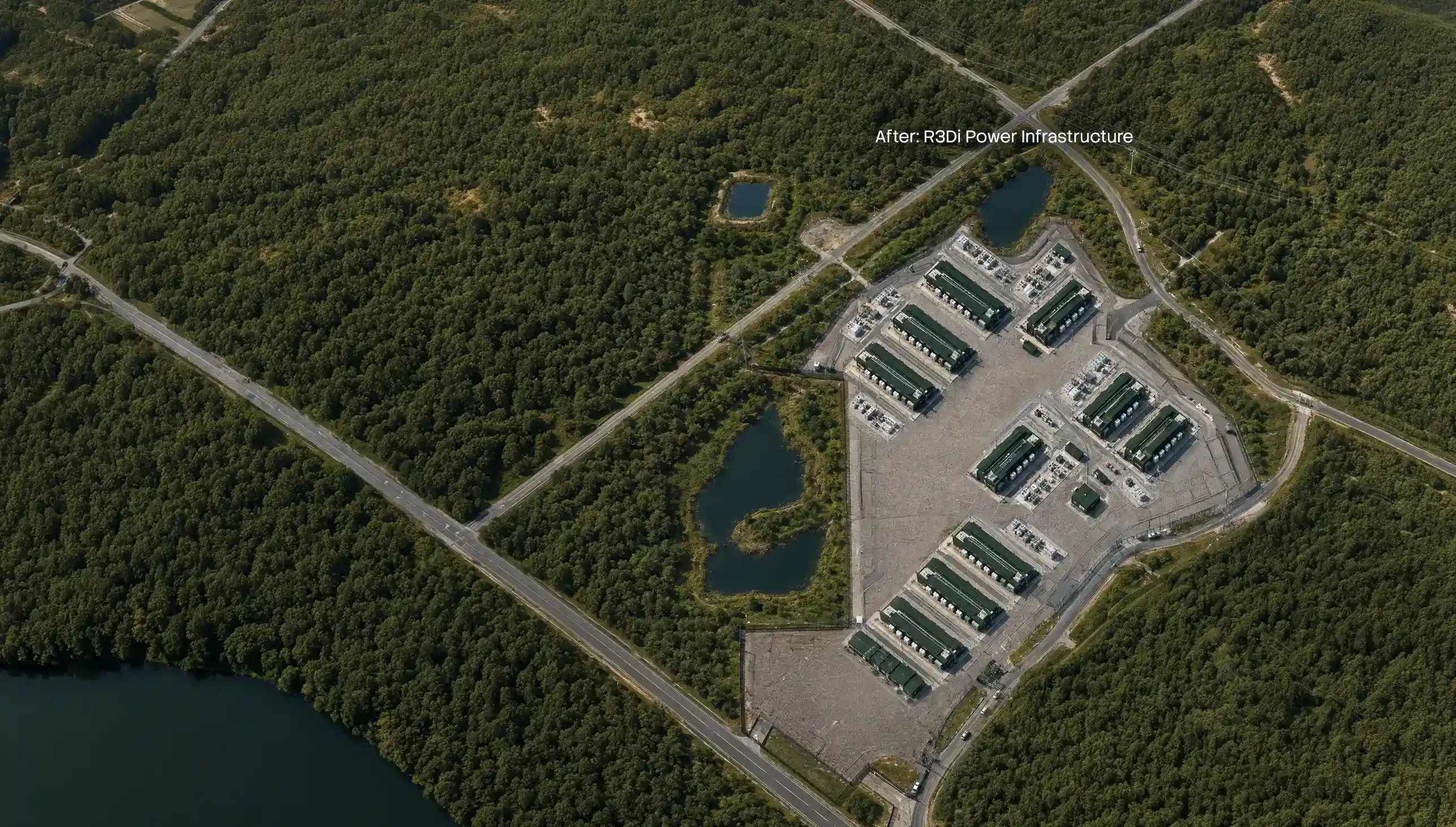
Deployed outside the data center, our compact architecture preserves valuable interior space while reducing the size of the exterior power yard. R3Di® and on-site generation can be vertically configured in modular 1 MW or 3 MW units, delivering more power in less space and making it easier to scale as capacity grows.

More Than a Microgrid. A Virtual Utility®

R3Di combines the capabilities of an uninterruptible power system (UPS) and a battery energy storage system (BESS) in one facility-scale platform. Certified to UL 1778 for UPS and UL 9540 for BESS, R3Di continuously conditions power, responds instantly to changing loads and supports the entire facility, not just critical backup equipment. When paired with prime rated onsite generation, it provides a bridge from immediate ride through to sustained operation.

How Is Virtual Utility Different From a UPS, BESS, Standby Generator, or Traditional Microgrid?

Evaluation Area
Conventional Components Used Separately
Virtual Utility
Primary role
Individual equipment addresses a specific function
Multiple power functions are coordinated as one architecture
Normal operation
Some assets remain idle until an event
Power-management functions operate continuously
Rapid load changes
Response depends on the individual equipment and controls
Grid-forming controls are designed around rapid system response
Power conditioning
May require separate power-quality equipment
Power conditioning is incorporated into the power layer
Source integration
Often requires custom multi-vendor integration
Sources are designed around a unified system architecture
Monitoring
Separate platforms may monitor individual assets
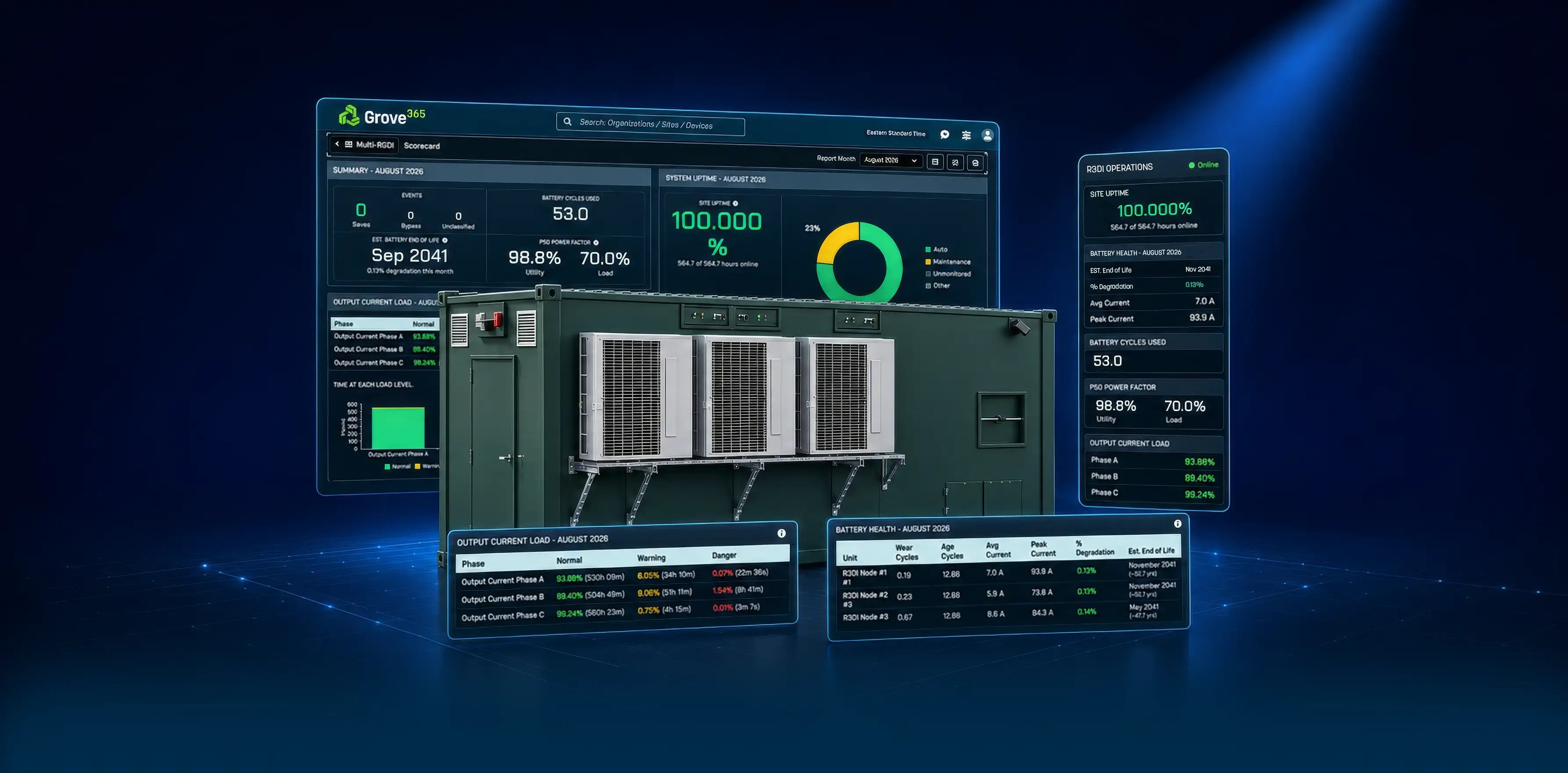
Grove365 provides a coordinated operating and service layer
Expansion
Multiple systems may need to be redesigned
Modular equipment can be planned around campus phases
Accountability
Several vendors and service relationships
e2 coordinates the complete project and lifecycle model

A Scalable Power Layer for Data Center Growth

Virtual Utility combines R3Di power infrastructure with Grove365 intelligence to create a scalable, utility grade power environment directly at your site. Beginning at 1 MW and scaling in 1 MW increments, it helps data centers deploy resilient onsite power, expand compute capacity and reduce dependence on lengthy utility upgrades.
Virtual-Utility-Combined-Platform-3MW-1

Frequently Asked Questions

Answers to the top questions we get asked by customers.
How does R3Di maintain voltage and frequency stability during high-amplitude load steps from GPU clusters, liquid-cooling systems, and other high-density computing infrastructure?
R3Di® maintains power stability through a double-conversion architecture that electrically conditions power before it reaches the connected load. Bidirectional, four-quadrant IGBT inverters perform AC-to-DC rectification and DC-to-AC conversion, helping mitigate voltage sags, surges, frequency deviations, harmonics, and fast load transients. A high-discharge lithium iron phosphate battery system supplies immediate power during rapid changes in demand while the prime-rated generator assumes the sustained load. Final performance must be validated against the data center’s load profile, including step magnitude, ramp rate, power factor, harmonic content, and redundancy requirements.
How does R3Di coordinate its battery energy storage system, double-conversion inverter, and prime-rated generation to deliver instantaneous full-load pickup and sustain long-duration islanded operation?
R3Di® uses its battery energy storage system and double-conversion inverter to support the connected load immediately when grid power is lost or becomes unstable. The battery bridges the transition without waiting for mechanical generation to start, synchronize, and reach operating conditions. The prime-rated natural-gas generator then assumes the sustained load and can recharge the battery according to the configured operating strategy. This combination provides the fast response associated with a UPS and the endurance of onsite generation, allowing R3Di® to operate either in coordination with the grid or independently in island mode.
Can it integrate with existing generators, solar, batteries, or other energy sources?

Yes. R3Di®  can integrate grid power, existing generators, solar, batteries and other on-site energy sources. Unlike traditional systems that simply switch between separate sources, R3Di® coordinates and conditions power from each source before it reaches your facility. This allows you to use existing energy assets while maintaining consistent, UPS-grade power regardless of which source is operating. 

How does R3Di compare with a conventional diesel-generator-and-UPS architecture in power quality, transient response, redundancy, efficiency, footprint, and lifecycle performance?

Each R3Di goes through comprehensive integrated systems testing (IST) and is one of the only battery systems that is both UL-9540 and UL-1778 certified.

Fully integrated hardware for on-site power (R3Di) and energy management software (Grove365®) provides customers with the entire technology stack in one package.

Speed to power with mobile R3Di units available for rapid deployment. Also transportable from site to site for phased construction.

With 3.5C vs. 1C discharge current, the R3Di® system will absorb a much higher range of load profiles, enabling full-facility backup as opposed to only critical load.

More megawatts per unit area. The R3Di® system takes up considerably less real estate than conventional systems, and no interior building space is required.

Longer lifespan. With standard applications, the R3Di® system delivers an estimated 4-5x increase in longevity over traditional UPS systems. 
Is the R3Di UL Listed?

Yes. The R3Di® system is both UL 9540 and UL 1778. This combination is very rare and demonstrates that the R3Di® is certified for both energy-storage safety and UPS-grade continuous-power performance – especially at utility grade, megawatt-scale capacity.

When you are evaluating systems, do not expect uninterruptable power performance without UL 1778. This is a mandatory for AI infrastructure and data centers.