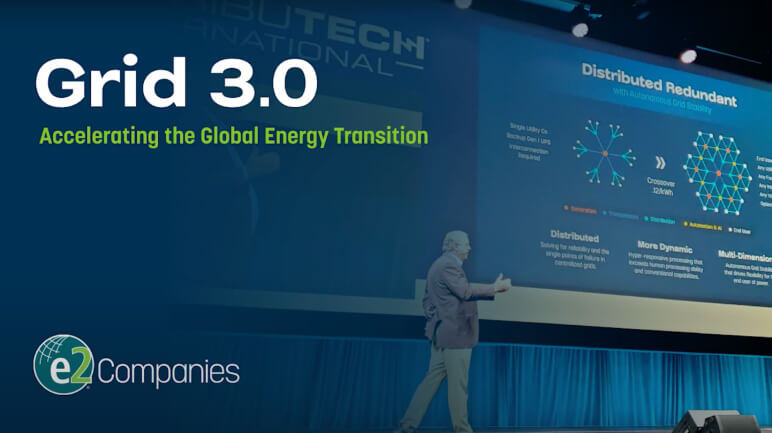
Good morning, good morning. Hopefully everybody's had a nice week. We're wrapping it down here. I know everybody's probably excited to maybe get back home to your families and business and what's going on. Hopefully everybody's picked up on this week that we're in a era of grid transition. This grid transition, we like determined is grid 3.0.
But when we talk about grid 3.0, it's usually good to go back and talk about how we got to where we are. So this is a nice simple event list of what's happening on the grid since the beginning. We started with the Edison, Westinghouse wars, and Westinghouse won the battle because of economics, right? We couldn't put things in everybody's location because quite frankly there just wasn't enough manufacturing to produce a grid to do that. So we went through that stage, we start putting things out. We realized, oh, this is pretty expensive stuff. How are we gonna do this? So we developed public utilities.
Public utilities then come into play and we start putting things out. In the seventies, we really ramped up all of our grid and put a lot of infrastructure out in the marketplace. So in the seventies, we formed FERC and we started making rules, FERC orders, we've all heard of them, there's a lot of 'em. But some of the interesting things that people probably don't know is wind started in 1980. How are we doing integrating that right now 50 years later? We're all talking about wind now, it's actually been around 50 years. The first EV cars were in 1998. How's the EV infrastructure coming 25 years, right? So that's kind of where we're looking at the grid and what's happening.
So one of the things that happened a couple years ago during Covid was the IRA. A lot of people called it, anybody know? Chapter 2: IRA and the green transition The green transition. Why is it the green transition? Because of this problem. This problem is a 500-gigawatt demand response needed by 2030. It's now 2024 and we just finished the rules on that last year, kind of. 'Cause you still gotta ask the IRS, well, do I qualify? Don't I qualify? When will I get my money? Can I get my money?
And also look at this chart. What's one of the things you see on here? A big blue piece, hydrogen. Do we all think we're gonna get that much hydrogen by 2030? How much investment will it take to get that much hydrogen by 2030 into the demand response system? I think that's a pretty big problem. So we look at the grid evolution and we look at grid 1.0, 2.0, and 3.0. Chapter 3: Grid generations and speed So we started a long time ago with this grid 1.0, which was pretty simple.
And then we go to grid 2.0. So grid 2.0, has everybody heard of demand response, right? So the emergency engines in the marketplace have this nice ten second startup. So let's do a little exercise on what the demand response is in grid 2.0. On the count of three, we're gonna hold our breath for 10 seconds, which is an emergency startup. Ready? Three. Okay, now we have power again. That's demand response with the emergency backup generation. Think that's fast enough to keep everything running in your business? Everybody in here would be leaving those doors right now if we waited 10 seconds, that's where we are. Now, bat your eyes, that's 100 to 150 milliseconds. We call that soft load transfer in our industry. That parallel transfer to 150 milliseconds is 10 times slower than what we need according to NERC to monitor the grid. So what does that mean? It means we got a long way to go and a short time to get there.
Everybody knows that movie too if you're old. So I compare that to the telephone industry. Chapter 4: Lessons from telecom industry So let's go look at the telephone industry. So POTS is Plain Old Telephone System. Those of us that are older had copper lines that ran into our homes and we had a phone system. We went to a wireless system and that ran on a 48-Volt network. The more phones you picked up in your house, the worse the quality got. In the old days when it was party lines, it went from house to house and you could listen in on all your neighbors. You knew when the neighbor was listening 'cause the quality got worse, right? So the smart guys in Silicon Valley started coming around and they came out with this power over ethernet and we all spent hundreds of thousands of dollars on these phone systems, right? These wonderful phones systems that we put in our offices. And they said this is gonna be the best quality ever. You have voicemail, all this wonderful stuff, right? We all spent a lot of money and went, "It really kind of sucks, it's not that good," right?
So then this era came about about cell phones. And so cell phone era come around 40 cents a minute, plus all the tariff charges associated with long distance on your phone, right? So a president named Bill Clinton created the Telephone Act. And why he created the Telephone Act was because he knew they needed innovation to change the telephone world. Today, I'll bet almost nobody in here has a copper line phone in their home. We all have cell phones, right? This cell phone has a 4,000-milliamp hour battery in it. This is the future of grid. The same way we change the telephone industry is the same metamorphosis the utility industry needs to go through. This phone, I can charge in my car, I can charge it from a USB, I can plug another battery into it, I can put it on a magnetic strip, I can plug it into the wall, I can use Bluetooth, I can use Wi-Fi, I can use three towers at the same time, I can use somebody else's towers, and the whole time I never lose communication. That's what we don't have on the grid. That's where the grid has to go.
Chapter 5: Economic shift to the user So when you think about this, this is what we're trying to create at e2. This is what we call "The R3Di". It doesn't matter to me where the power comes from, I'm gonna make use of it. I want it to be on 24/7, 365. I want to know how much my power consumption is. I don't care what apps I buy, what I need to do, I just want it to work, I want power. So economically, what does that mean? Well, this little company named Apple who way benefited from the phone industry is almost 3 trillion in market cap. Their return on assets is almost 30%.
The utility space has been considered the best return on assets for many years for long-term because of 40 and 50 year assets that have been available to make a significant return. That significant return is now down to 3 to 5%. Me putting assets at the customer is 9 to 15% return on assets. That means the investment world is going to change where they put their dollars. The dollars are going to flow from the utility to the end user. It's the same issue in the EV space. We wanna change people's habits instead of making their life easier. If you make their life easier and make it disappear in the background, they're gonna be more inclined to buy it. So that's a metamorphosis change for the utility industry to go through, going to, "Hey, I really care if the end customer stays up all the time, I feel his pain." Not, "Hey, I'm gonna use this smart meter to curtail his load and he may not even know it. I'm gonna go ahead and make that decision for him 'cause it's the greater good." Well, the greater good doesn't make me money in my business. I need to make money in my business to pay my taxes, which is for the greater good, right?
So we will create an economic energy culture that we will have to deal with as a society in the future if we're not careful. You'll have people that can afford energy because they'll put it in themselves and be independent, and you'll have the other people who are left behind in the old system, and those people that get left behind will be paying a significant amount more money for that same power that they were paying. The utility bills already are exceeding standards that people want to pay. You're getting to $250 a month for a basic home. That's a significant amount of money for many people in America.
So when you start thinking about the utility grid now, start thinking about FinTech and utility tech Chapter 6: The future of grid efficiency and it's a three time return on assets over the current utility marketplace. So this is what I think it looks like in the future. Today, if you look on the left, you see the single infrastructure, right? We had a large power plant, we have a transmission system, and then we have substations with distribution and we have end users. Well, the crossover point today, I will tell you because I will sell it to you if you want it, 12 cents a KW is the crossover point.
The average price of utilities in the United States right now is 14 cents. That means in many parts of the country right now, you can already buy these assets using the IRA tax credit and produce power on your property cheaper than you can buy it from the utility. That's the reality of where we're at. That's the message that we need to get out to people, that the utility has to come to the new mindset.
The new mindset is the end customer in the distribution network is where the future improvements are going to come from. So the efficiency in the marketplace is this single power distribution system that we have is 40 plus years old. 50% of the grid is at end of life. It doesn't matter what you think about CO2, we gotta have power. If we're shutting half the power down in the United States, it has to be replaced. How are we replacing it is what matters. Are we gonna replace it in the same way we tried to in the past? Are we going to change and innovate how we derive power to our businesses and our residential and everybody?
I believe that solar one day will be cheap enough that the investment capital people will put $5,000 solar systems on your house and you won't need the grid because if their return on investment is two or three years, in a system that lasts 20, why wouldn't they do that? Chapter 7: Virtual utility and innovation So in this end user system, we're going to go just like the cell phone, to this end user synthetic bus. And a synthetic bus is different than an inertial bus. We're talking about magnetism when we have spinning reserves. We're talking about reacting to conditional pulses in a synthetic bus. So if you have have a synthetic bus with inertia, you really need to, this is where AI starts coming into play.
What is the signature of what's happening downstream and upstream so that I ingest enough inertia into the system to stop droop and stop over-voltage and make sure I have the right amperage running? That is the future of the grid and where it's going. So it's distributed redundant. So you're still gonna have the big power plant, but you're going to have what Thomas Edison said a long time ago, a whole lot of distributed energy.
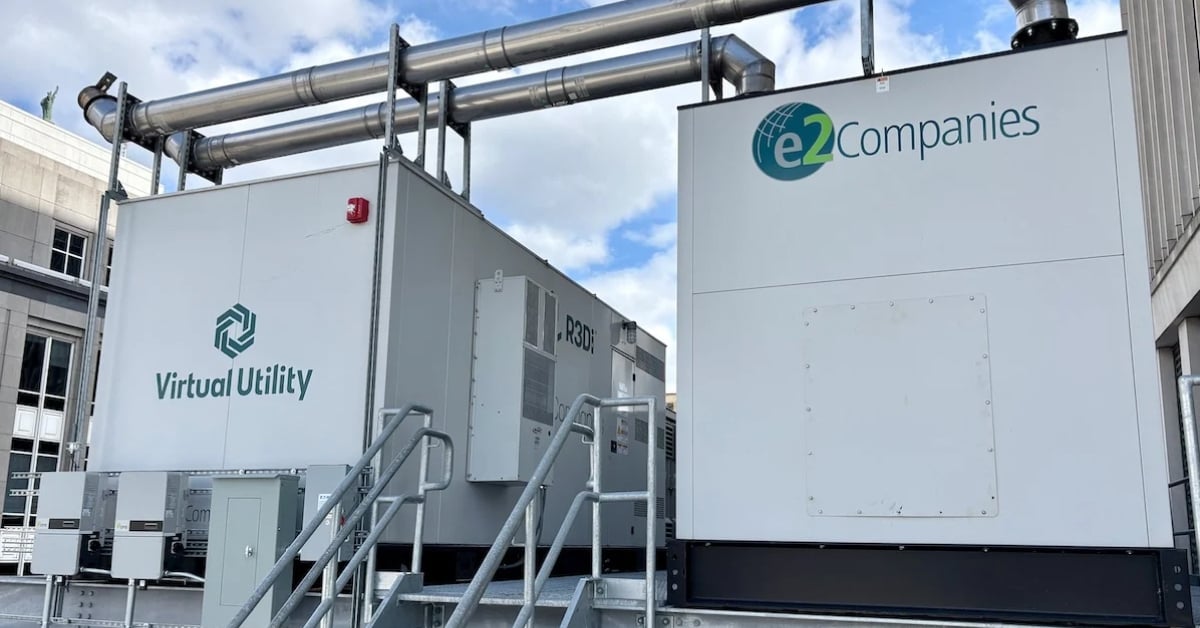
So one of the keys to this that we focused on is how do you do this without having all these interconnections? There's 2000 gigawatts of interconnection requests. We all know all those won't make it, but in the end, it's three and a half to five years right now to get an interconnection agreement. We can go back to the slide. How do you get 500 gigawatts of distributed resources online? It's 2024, you have six years left with a three and a half to five year interconnection process. It's not possible. We have to think better, we have to be more innovative, and that's the process that we need to get through here for the future of the grid. So if you wanna stop by our booth, we'd be happy to have you there. We can walk through what the Virtual Utility® is, we call it. I call it a Virtual Utility because essentially we're putting everything behind the grid in a substation or at a customer that the traditional utility does today. That's the idea of what I think the future of the grid is going to be like. So if you want to really think about how we can progress this forward, it really is thinking about the demand side with the customer. How do we make the customer happy? How do we make the customer's life easier? And how do we do it cheaper than we do today? 40 cent telephone per minute cellular would have failed. 25 cent electrons from your utility will fail.
And if you think we're gonna charge 25 cent in America for utility infrastructure, I'm gonna tell you there's gonna be a lot of utility failures in the future. The smart money will be on the demand side in that case, it's not gonna cost that much.

 Partner Spotlight: How 34 Group Is Building Community and Resiliency In Western New York
 See how on-site power can improve your facility’s reliability, control, and performance.
 Get a clearer view of regional grid risk, operational exposure, and the path forward.