Welcome everybody. Thanks for coming. She went through that piece. So the aging infrastructure and reactive solutions cannot meet the modern reliability needs. So, is everybody familiar with the Iberia or Spain outage that happened not too long ago? So, I love to use that as an example. If you blink your eyes, it takes about 2 to 300 milliseconds. The outage in Iberia was caused by a breaker that was 20 to 30 milliseconds. In 20 to 30 milliseconds, a breaker went off. A closer then reacted in 500 milliseconds. In one and a half seconds, 60% of the grid was down and 90 seconds later, the entire grid was down. So, if anybody knows how much how fast your current AMI meters read, one minute intervals and then it's collected at about two or three times a day. So the AMI infrastructure that we put in which the utilities all sold us was supposed to give us all this great insight of information on our grid is completely useless in a case of what happened in Iberia. And by the way the Iberia situation was a 355 megawatt PV field. That 355 megawatt PV field in 1 and a half minutes was 15 gigs of power offline.
So the cause and effect is real. So what you're seeing happening today with like FK 2023 and some of these rules are really built around how's this modern infrastructure that we're trying to install behind the meter going to react with the infrastructure that we have on the utility side of the meter. And the fact of the matter is, and I just said this in an interview out here, the grid that has supported us well for a hundred years is not going to support us into the future. It's just a fact of life. So how is our grid done? So this is the last few years of our grid. Outstanding, isn't it? So we really got a C and you know why we got a C minus? It was CO. During COVID, a lot of the manufacturing was shut down. A lot of businesses were shut down. So the grid had less outages. So we had a lot less outages because nobody was at work. Everybody was at home. So at home we don't have the peaks and and valleys associated with things starting up in factories and what's happening on the grid. So because of that we had a really good year of a C minus a C minus right. So you go well what's all my money going to? Well the problem is the infrastructure in the US is way past its life expectancy. You know we have uh coal is at 45 years. uh hydro's at 55 years. Uh nuclear is in the 45 year range. All these assets are going offline. Those assets make up about 60% of the grid. So a couple trillion dollars from now, we'll have those things replaced. And the things we're replacing on the grid do not meet modern-day problems. The problems we just talked about, millisecond reaction time, those things don't solve. A nuclear plant is a nice flat line. SMRs, great technology. Can't wait till it's here. 20 megawatt plants running high school, college campuses, big campuses around the US and around the world actually will be very good systems. However, nuclear doesn't go on and off in milliseconds. It doesn't do peak shaving. It doesn't do all these things that happen. A a GB300 chip from Nvidia, anybody know how fast it reacts? 400 microsconds. In 400 microsconds, it can do a 100% load step. So that is a lightning speed. I just said milliseconds. A 20 to 30 second millisecond problem caused the problem in Iberia and we have chips that are reacting in 400 microsconds. This is the problem of the future of the grid. And we all know what happens with with technology, right? The phone you have in your pocket today is not the flip phone of 25 years ago. So this problem will continue forward as we keep going.
So this is what we've spent to get our D's. We have tripled the amount of transmission spending and we've increased distribution spending by $31 billion. And the EIA report, has anybody seen last year's EIA report? They expect by 2030 100 times more outages than we by 2030 than we experienced in 2024. Anybody know what the average outages in 2024 were? 1.5. So we will go to 150 outages a year on average by 2030. The time of that is 5 1/2 hours in 2024. So now we're talking about 750 hours of outages. The cost in 2024 of the outages was $150 billion. In 2030, if we take the same 100x multiplier, it's $15 trillion. That is half of the United States GDP. Why aren't we hearing this on the news? This is the crisis that's not being talked about in our country right now. It's an absolute crisis and no one's paying attention. We're arguing over is it really 100 times? Is it really going to be 500 hours? As opposed to are you happy with 10 outages, 20 outages? Are you happy with 100 hours, 200 hours? The fact of the matter is the problem is going to get worse. And as we keep adding large loads and more technology, we're actually accelerating the problem.
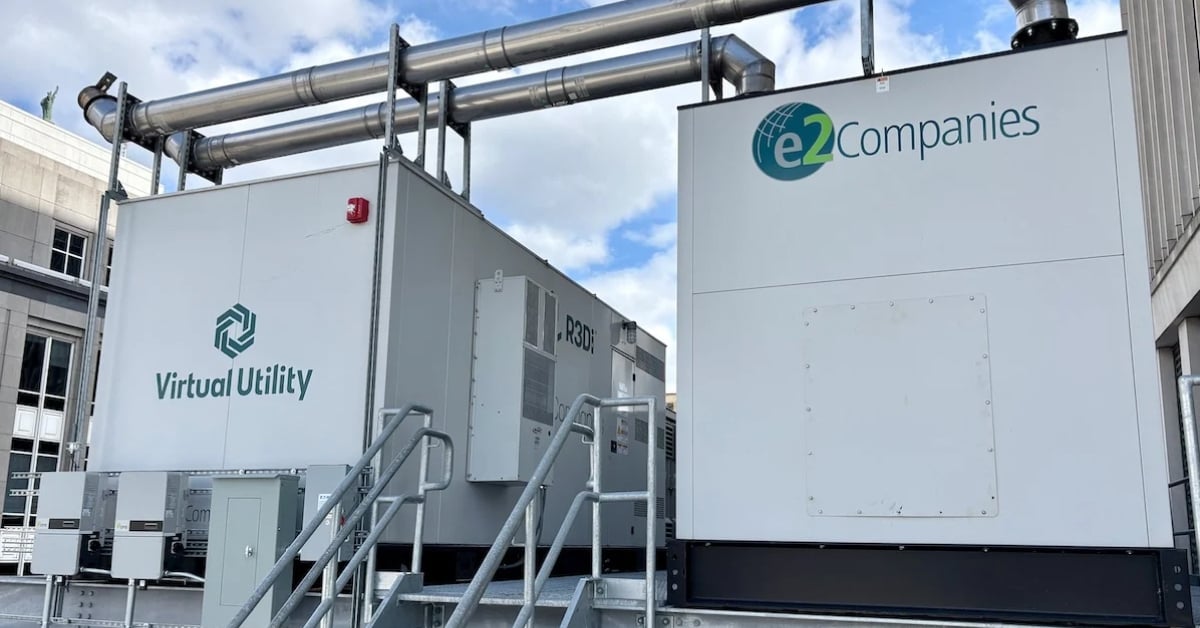
So, we have a customer named GA Winer. Uh this is a rendering plant. If anybody doesn't know what rendering plants are, it's actually a necessity for most of us that we don't even know about. But they basically take carcasses that are roadkill, uh old animals, things that are disposed of by all the food that we eat. They grind it all up. They make dog food and unfortunately for the ladies here, uh, makeup, oil for makeup. That's where a lot of it comes from. So, GA Windsor has about 125 motors at their facility. Those motors go off like popcorn. They're from about 20 to 30 horsepower up to 350. They have aerobic digesttors which have amiebas that have to stay alive to kill all these things that that uh get caught up in the water system that they have to treat. So GA winer is at the end of a line outside of Wapaetta, Ohio and they have a PV field between them and the substation. So they have horrible voltage problems, they have horrible amperage problems and they have horrible frequency problems all because of the motors and the grid itself. So AES has even been out. They put meters on that and AES just had a meter on there and they said, you know, you're only losing 500. We're we're staying within 500 milliseconds of downtime all all the time. We only have a couple events a week at 500 milliseconds. 500 milliseconds takes the plant down. By the way, 500 milliseconds took the entire Iberia Peninsula down, which I reminded the tech on the phone. I said, 'Why do you think 500 milliseconds is no problem? You know, when you're at home and you see your lights go, that's that 500 milliseconds. So, at your home, you may not lose power, but if you have high sophisticated equipment with capacitors and processors, 500 milliseconds means you're going down. It's that simple. So, that problem, they said, "Hey, can you guys help us?" So, we brought in the ready several years ago. We brought in the system. And part of the justification for this was they wanted to have their power uh they wanted to have it clean. So we do clean condition power with this system. We actually are independent of the grid. So we can be on grid or off-rid. We're actually both at the same time with this system. And we use AI to predict the loads. So we're using weather patterns. Uh we're a CSP. So we actually have the information coming from PJM to our system. So we're watching the load conditions at the site from the grid. We watch the load conditions in the plant. We watch all the material that's going through the the the facility so that we can do load predictive analysis along with weather and grid conditions. And we use those AI algorithms to actually program and make sure the load is is running at its optimum levels.
Well, these systems are not cheap, right? These systems are much like you would put in a data center. And just so you know, data centers in the three and a half to 5 million a meg. That's kind of the cost to put in a very high-end clean condition system. So this system is right up in that scale with those kind of price ranges. But there's three great things going on right now. We have the one big beautiful bill which gives you a great tax incentive for micro grids. This is micro grid knowledge. And if you don't know about the one big beautiful bill, you should become an expert on it because you can get up to 50% tax credits on everything except the power generation unit itself. So it's a very good system for the customer. The customer gets immediate savings. The other piece to this savings and and the stability is really you know now I have all this functioning grid and my own micro grid sitting there functioning. How can I increase my efficiency associated with the plant? So now we actually work with the plant and their operator on what's happening at their facilities to actually help with the predictive reliability of the system. So once again we can take uh human activity and say okay let's program the human activity in this. We actually know from their energy consumption what their revenue is at this point. We can predict their revenue from energy consumption. That's how good AI is in the real world when you're looking at power. Now the downside to that is there's a lot of people who may not want you to know their revenue because you can start manipulating stock as well. It's a whole other topic. But the reality is you can start monitoring production with power, which is a scary thought for some people, but for us, it's great for reliability. So, we bring that stability into play. We know when there's going to be cloud cover. We know when things are going to happen on the PV field. So, we're starting to see and we actually have more information on AES's grid than they do. We've actually sent them spreadsheets of all the times they're outside their 5% tariffs, which is about 25 times a month they're outside of the 5% plus or minus on voltage or frequency. And what's happening is most people don't even know this is going on in their operations because it's happening for these momentary times, right? So it's happening in this, you know, probably under five minute scenario, but it's happening three or four times a day and it happens almost at the same time every day that you would expect, right? Everybody's familiar with the duck curve if you're a micro grid knowledge person and those duct curve events is what creates frequency and voltage problems on the grid and as does the PV field. So because we know this is happening and we have uh IGBT inverters, we actually control the voltage to the building. So we have CTS and PTS in the system on the building. We actually control the voltage. So we're across the street from the plant. We run natively at about 500 volts on the system to make sure they're at 480 in the building. So why are these events a big deal? Well, when you talk about stability, I mean, motors have a rating typically 460 to 480 volts, but the reality is with the when they're outside of their tariff and they're across the street from their feeder, their plant's getting down to 420 volts, which means you're burning up motors. They're running hot. You're burning up windings. And and they were burning through about a million dollars of motors a year before we showed up. It's a lot of motors they were burning up in their building. Had no idea why. And now we have the information to know why they're doing it, how to fix it, and how to control it. And all that really comes through AI, right? And and I changed the name of this presentation so everybody knows a little bit because I don't have any slides to demonstrate what the AI is. So I'm like I really don't like to use the name AI if I'm not showing anything that has to do with AI because it's a customer study here. But the customer study within this embedded is our AI infrastructure within this. So the AI pieces that we're using is for the stability and the efficiency of the system.
So the final piece that we do in this is really about how do we turn this reliability into strategic revenue as a generating asset. So we we were a CSP bidding things into the market for a while and what we realized it's not really our strong suit. Uh we're really power guys. We do power generation, we do power management, we do power configurations. We really understand that side of the business very well. Uh we're effectively an IP for many customers. And so we actually did an agreement with CPA uh a couple years ago and said this is your Bailey Wick. You guys handle this for us. And so we've taken our customers uh all over and turn them over to CE Power. They work through our knock with us. Uh we have our own we call it the Grove. Uh, but it's where we really monitor and manage all these assets. So, this customer seamlessly doesn't even know when we're in the market. They have no idea when we're in the market. This power generation's across the street. Their plant keeps running. They have no idea what's going on.
So from there we really take this reliability and and I know for years because I've been in the DR business in this company since 2009 you know we were always trying to justify to customers how do you get to uh a nocost asset right that gives them some reliability some backup generation through market uh participation but a few years ago we went through a dip in the market and you know a couple years ago it came back about 10x the dollars but but that is a very cyclical kind of event that happens in the market for participation. So is a nice benefit but it's very hard to pencil especially with the current dynamics associated with utilities of interconnections. So we eliminate the parallel interconnection agreement. So without a parallel interconnection agreement you eliminate a lot of engineering studies for the utility. So because of that you can go to the regular meter. We put our system in between the meter and the building and allows us to because we're grid follow as the power comes into our system and then we form our own grid to the customer. So we sit in there in the middle of this which allows us to go on and off grid on the front side of our system without the customer really knowing because we're supplying everything on from this system on the downstream. So what that does is it then gives CP power everything they need to participate in any program they want to participate in. We give the customer upside in that. It helps pays for this investment and it really is uh the nice kind of uh icing on the cake for customers.
And while years ago the grid was much more stable and and much more friendly to the customer, but as these outages are continuing and getting worse and by the way we monitor about 600 systems in the market and we see it in all the systems. We see the grid functionality getting worse every day. So we have that data. We've logged Neil can give you the numbers probably in the range of I think it's 100 million hours or more about yeah probably he says more. So we have over 100 million hours of monitoring grid conditions. And so we know what's happening on the grid and we're seeing the degradation every day in the grid. So if you're not doing it now, you're probably going to have a lot of customers asking you to do it in the future for this strategic uh reliability associated with their equipment and their processes and how they run their systems. It'll be incremental for them for keeping their revenue flowing. And the other side of this is you can still do the grid participation stuff. And these programs are changing pretty rapidly right now. I mean there's, you know, we we are working with a on some stuff with customers right now of automated fiveminute notifications for frequency response that we can curtail from a 450 megawatt to 300 megawatt. They're writing it actually into our ESA with them in five minutes from a grid signal. So, it's autonomous. It'll be an autonomous 5minute uh reduction of power. So, the problem with that is there's all the tariffs haven't caught up with this yet, which I'm sure Russ can speak about. So, so the tariffs are kind of catching up to some of these things going on. So, the people at this conference are really ahead of the curve. Uh, and I would say between the um the federal power act and the new FK stuff going on with with the Federal Power Act 205 and 206, I believe it is, gives you a lot of advantage in the marketplace. uh for quarter 2023 gives you advantage in the marketplace. And so these are kind of the things that we keep in in our mind and keep what's going on. So with that, I'll let Russ come up and really explain about what this flexibility does for you.
Yeah. Thanks, James. So the grid needs flexibility. The grid needs more energy. The grid needs more capacity, right? I mean I I saw a stat recently that said really the cost of energy has been like you know pretty stag or excuse me the load has been pretty stagnant the past decade or so but in the next 25 years it's going to more than double. So just think about if we have reliability needs now and you saw the scorecard earlier how bad is it going to be in 25 years from now. So you know prices today prices are going up they're only going to go up in the future. I I really wanted here just to have that one chart in the top left. That's a PJM capacity clearing price over the past 10 years. Um, show our hands. Who's seen that chart? Who can see the chart now? Who's seen it before? Right? That is like the poster child chart of what's happening across the country right now when it come when it comes to power prices. So we all remember late July 2024 uh the p the the clearing price came out for the 2526 PJM capacity auction and boom it was 9x 9x of what we had uh the year prior and we've stayed there and the fk just uh this month approved or last month approved that we're going to have this cap and collar again so prices are going to maintain at a high level and capacity Carl that's like 30% of somebody's bill like it's a big chunk of their bill um but it's not just capacity it's energy it's happening everywhere You talked James about the retirement of plants. It's all driving into this increase in cost, right? So when you have assets like that, you can both make revenue and reduce cost associated with it.
So um another thing I I read recently was like more than 85 or 80% or something like that of distributed energy resources today actually do not participate in grid service programs. So they're not doing demand response, they're not doing any reliability, they're they're just sitting there. So if you have an asset that you're not doing anything, it's a stringed asset. I mean any market you're in and whether you're talking deregulated or regulated utilities, you probably have a stack of different things you can do both to mitigate cost at your at your facility as well as create revenue create a revenue stream from it. We talked with the G Windsor plant doing it now. That's doing a capacity style program today. Um capacity is what we all know that hey the the grid has an emergency. there's not enough uh power supply to get some where there's comm transmission constraint. What do we do? We need to drop the demand on the grid. That's capacity. Okay. Um there's also energy programs you can do. It might be more cost effective to generate your power on site than it is to buy from the grid. And then ancillary, some of the things James talked about now, the quick response, 5 minute response times, 10-second response times, they're all pretty important and assets like the ready system can do this. Um, but since you've got that asset, you can also do on bill savings. So transmission, those are nits charges, capacity tags, they're all pretty pretty big components of the bill. Peak demand management, that's your utility distribution level, your KW you have in a month. You you hit one spike, you have a cloud come over that PV array, and one spike all a sudden you're you're up here in demand used to paying down here. That sets your rate for the next 12 months, 11 months. So systems like the ready system, distributed energy resources can help manage that. So you can see a benefit both from the grid. The grid needs these. And you can also use that asset to benefit your site from a revenue generation perspective and a cost savings perspective.

 Partner Spotlight: How 34 Group Is Building Community and Resiliency In Western New York
 See how on-site power can improve your facility’s reliability, control, and performance.
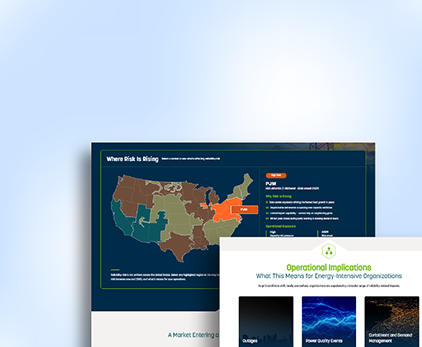 Get a clearer view of regional grid risk, operational exposure, and the path forward.