




The term ‘microgrid’ has become so common among energy solutions providers that it has created confusion among buyers who aren’t sure what to expect when they invest in one.
A microgrid is an on-site system that integrates distributed energy resources, energy storage, and intelligent controls to supply power to interconnected loads.
But unlike conventional backup power systems, it’s capable of operating in sync with the grid or independent from it. See how Virtual UtilityⓇ compares to other microgrid solutions in this quick chart.
What Are the Core Capabilities of a Microgrid?
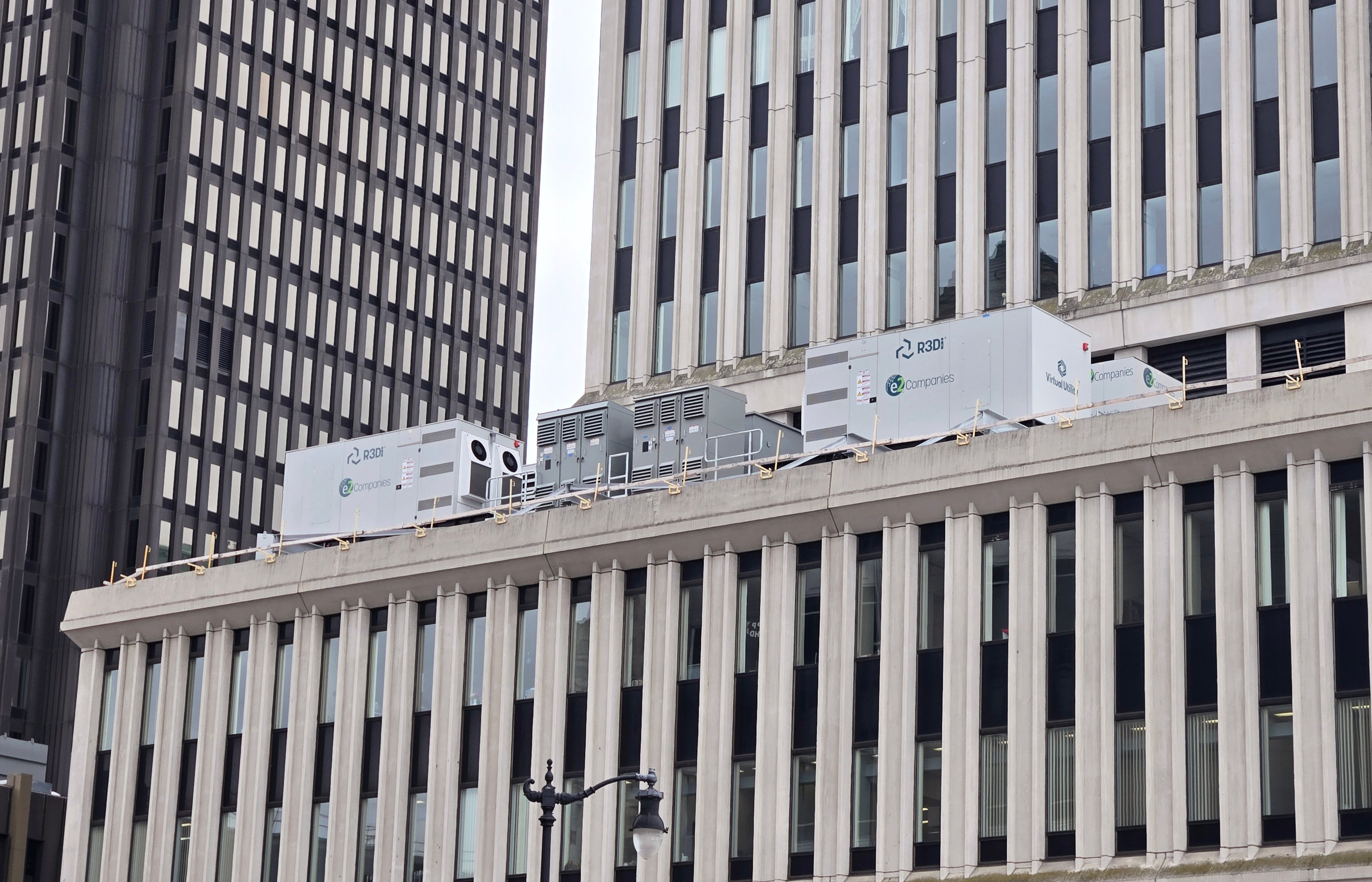
Think of these as functional requirements. A system that can't do all four is a backup power system.
On-Site Power Generation
A microgrid generates electricity locally from one or more distributed energy resources, such as natural gas generators, solar panels or wind turbines. On-site generation allows the system to sustain critical loads when the main power grid fails.
Natural gas generators run from existing pipeline infrastructure, which means there’s no stored fuel on site and no degradation risk. Stored diesel fuel begins to degrade within 6-12 months, a vulnerability that Hurricane Ian exposed in 2022 when more than two million customers lost power and facilities discovered the diesel they'd counted on had degraded beyond use.
Energy Storage Systems
Energy storage helps microgrids transition seamlessly during grid disturbances.
Battery systems can dispatch power in milliseconds, bridging the gap between an outage and generator response while also smoothing variability from renewable sources like solar and wind.
Without storage or another high-speed ride-through source, conventional backup systems may experience a brief interruption as the generator starts, stabilizes, and transfers load.
For data centers and other critical facilities, even short disruptions can count against strick uptime requirements such as the “five nines.”
Beyond reliability, energy storage can also support demand response, reduce peak demand charges, improve power quality, and store lower-cost energy for use when prices are higher.
Power Conditioning
For mission-critical facilities, poor power quality can be just as frustrating and costly as power outages. This was one of the challenges facing G.A. Wintzer & Son Co., a rendering and recycling facility in Wapakoneta, Ohio.
The facility processes used cooking oil, meat scraps, and animal co-products around the clock, requiring stable, continuous power.
Located at the end of a local utility distribution line, the facility sat at the most exposed point in the network. Voltage fluctuations degraded equipment and regularly halted production.
These power quality problems caused tens of thousands of dollars in damages to sensitive equipment.
A microgrid like Virtual Utility solves for this by stabilizing the frequency and voltage of power.
e2Companies’ patented R3Di® System addresses this through a double conversion process. Incoming AC power is converted to DC, then converted back to AC before it reaches the facility's loads. That two-step translation acts as a filter so that by the time power gets to your equipment, the voltage sags and spikes have been smoothed out.
Intelligent Control Systems
When a facility is using a microgrid to its full potential, operations managers can use it for more than backup power and addressing power quality issues. They can rely on it when they want to reduce utility costs or take advantage of rate incentives that reward them for using less power during times of high demand.
Intelligent controls act as the brain of the microgrid, signaling when to deploy it strategically based on other factors.
Energy management systems monitor energy flow across all assets continuously, as well as grid conditions, market pricing, and weather forecasts. Advanced control systems make active dispatch decisions in real time, including when to generate power on-site, when to draw from the grid, or when to charge or discharge storage.
Without this intelligence, you have assets in parallel.
A generator and a battery that don't communicate is not a true microgrid system.
Renewable Energy Integration
A well designed microgrid can accept inputs from renewable energy sources and manage their variability. The ability to incorporate these energy sources, such as rooftop solar power or wind turbines, makes a microgrid even more powerful and versatile.
It makes renewable resources more practical and reliable, allowing companies to source more power from them and achieve sustainability targets.
The microgrid itself serves as a cleaner alternative to diesel generators, reducing emissions by as much as 90%.
What Are the Key Components of a Microgrid?
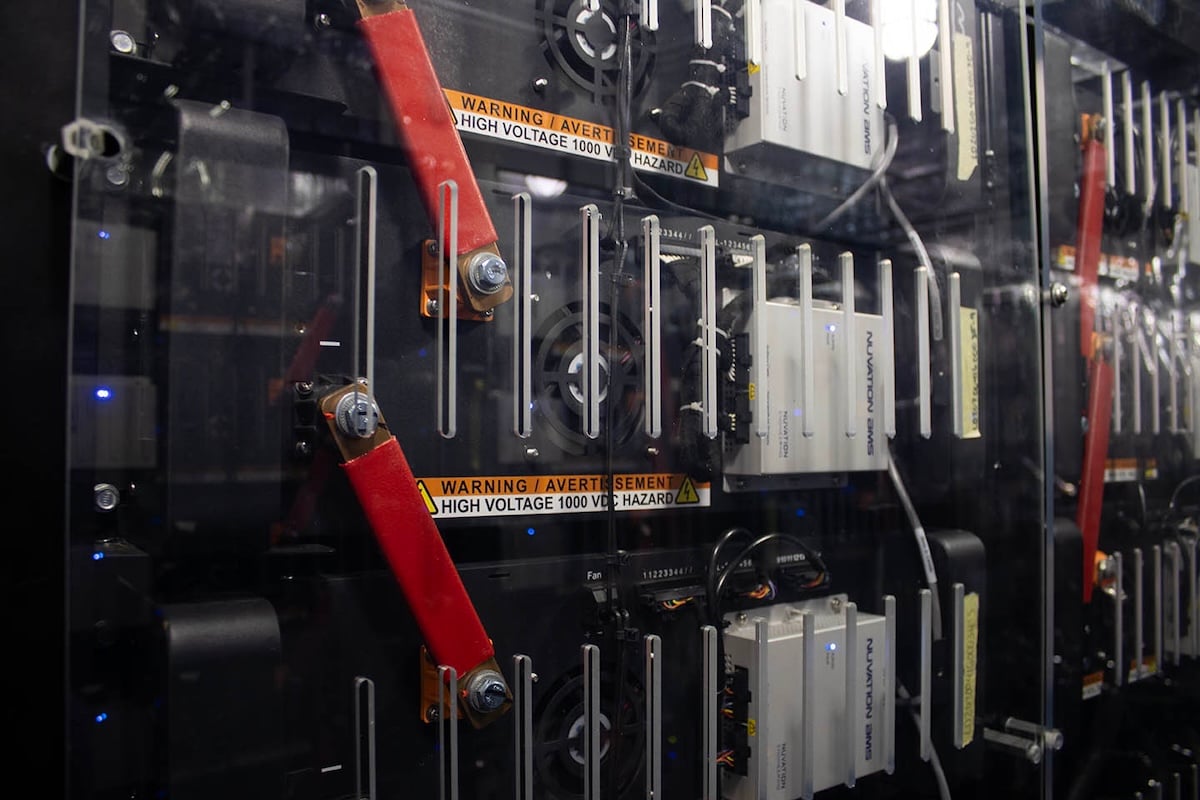
To have these five capabilities, a microgrid needs the right components. Here are the most essential ones.
Prime-Rated Generator
The generator is the backbone of the system, but it’s important to understand the different types of generators. A prime-rated/continuous power generator is designed for continuous operation, while a standby or backup power generator is designed to operate only during utility outages. These are typically designed to be used for no more than a few days, or a set number of hours per year, and they can break down if they’re used beyond their capacity. Prime-rated generators can sustain a facility through extended outages and can recharge its battery system between discharge cycles.
Battery Energy Storage System (BESS)
The BESS delivers instantaneous power during the transition from grid-connected to island mode and absorbs transient voltage events that generators alone can't address. Lithium iron phosphate (LiFePO₄) chemistry is ideal for industrial and commercial applications because it’s thermally stable, long-cycling, and more energy-dense than lead-acid alternatives.
Learn more about the advantages of lithium iron phosphate batteries.
The size of the BESS determines how long the system can sustain the facility between generation cycles and how much stored energy is available for demand management or grid services.
Switchgear
A switchgear is a collection of breakers, disconnect switches, and controls that manage the electrical connection between the microgrid and the power grid. It acts as a traffic control system for electricity, determining when to shut off power or redirect it from another source.
In a true microgrid, this transition happens near instantaneously.
Energy Management System
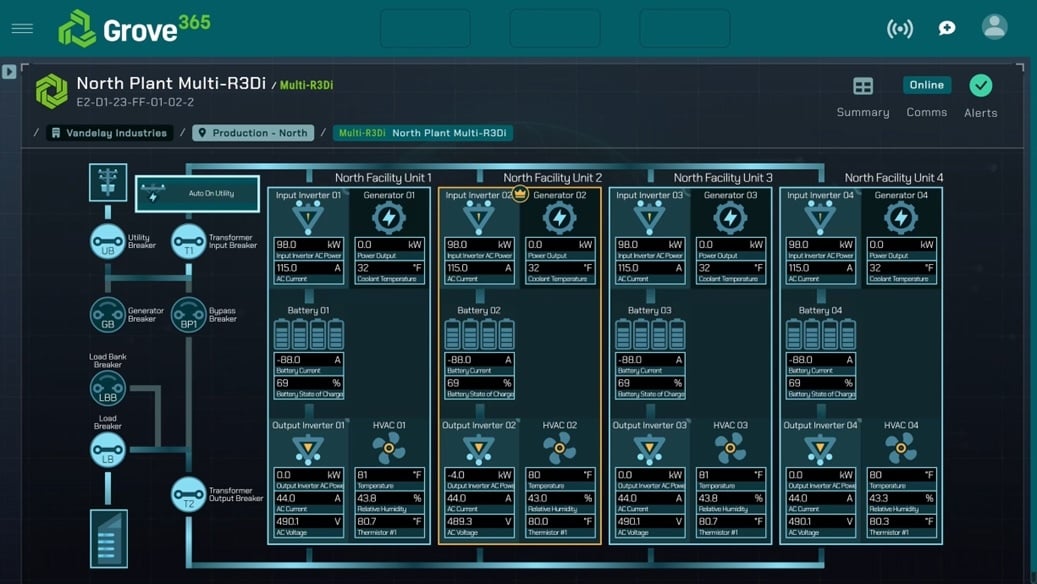
The energy management system, also known as energy monitoring software, monitors assets in real time and dispatches power based on facility load, grid conditions, energy pricing, and asset health. New energy management systems at the facility level bring the kind of intelligence that was previously only available to utility operators. They are an important factor that separates a true microgrid from a collection of independently operated assets.
e2Companies’ Virtual Utility® uses AI-powered monitoring software called Grove365®, which includes predictive analytics and forecasting to help facility operators estimate their power needs. It’s supported by a network operations team that works 24 hours a day, seven days a week.
This combination of software and people helps operators plan for times of peak demand and allows them to reduce reliance on utilities.
Battery Management System (BMS)
The battery management system monitors cell-level health, temperature, state-of-charge, and performance across the full battery energy storage system. It manages charging and discharging and recognizes when a battery is low or degraded.
The R3Di System uses a battery management system designed by Nuvation. The batteries within it are designed to last upwards of 15-20 years, much longer than lead acid batteries, which typically have a lifespan of 3-5 years.
Inverters
Inverters convert direct current (DC) power from batteries or solar to the alternating current (AC) power that facility equipment uses. Dual inverters offer redundancy, a design requirement for any facility that can't accept a single point of failure in its power supply.
In the R3Di System, they also allow the technology to be both grid-forming and grid-following at the same time. Grid-forming components create electrical waveforms, while grid-following devices synchronize to that heartbeat and contribute power.
A resilient microgrid uses both.
What Is Not a Microgrid?
A generator paired with an automatic transfer switch and switchgear is a standby backup power system.
It's technology with real value in the right applications, but it's not a microgrid.
Without energy storage systems or intelligent controls, there's no bridge across the transition and no mechanism for demand management or demand response participation. Control systems in a standby configuration manage the transfer sequence, not real-time dispatch across multiple assets.
A standalone BESS without generation sits in a similar position. It's valuable for short-duration events and power quality support, but without a generation source behind it, there's no path to sustained islanding during an extended grid outage.
A number of solutions on the market today, particularly those positioned as "data center power solutions", use microgrid terminology but lack a fully integrated system. For instance, some have technology that produces and stores power on site while others have intelligent controls (such as an energy management system) but few have both.
A true microgrid can generate power on site, store and dispatch energy intelligently, condition power quality, and operate independently from the grid as a single, coordinated system.
Why Virtual Utility Is Built Differently
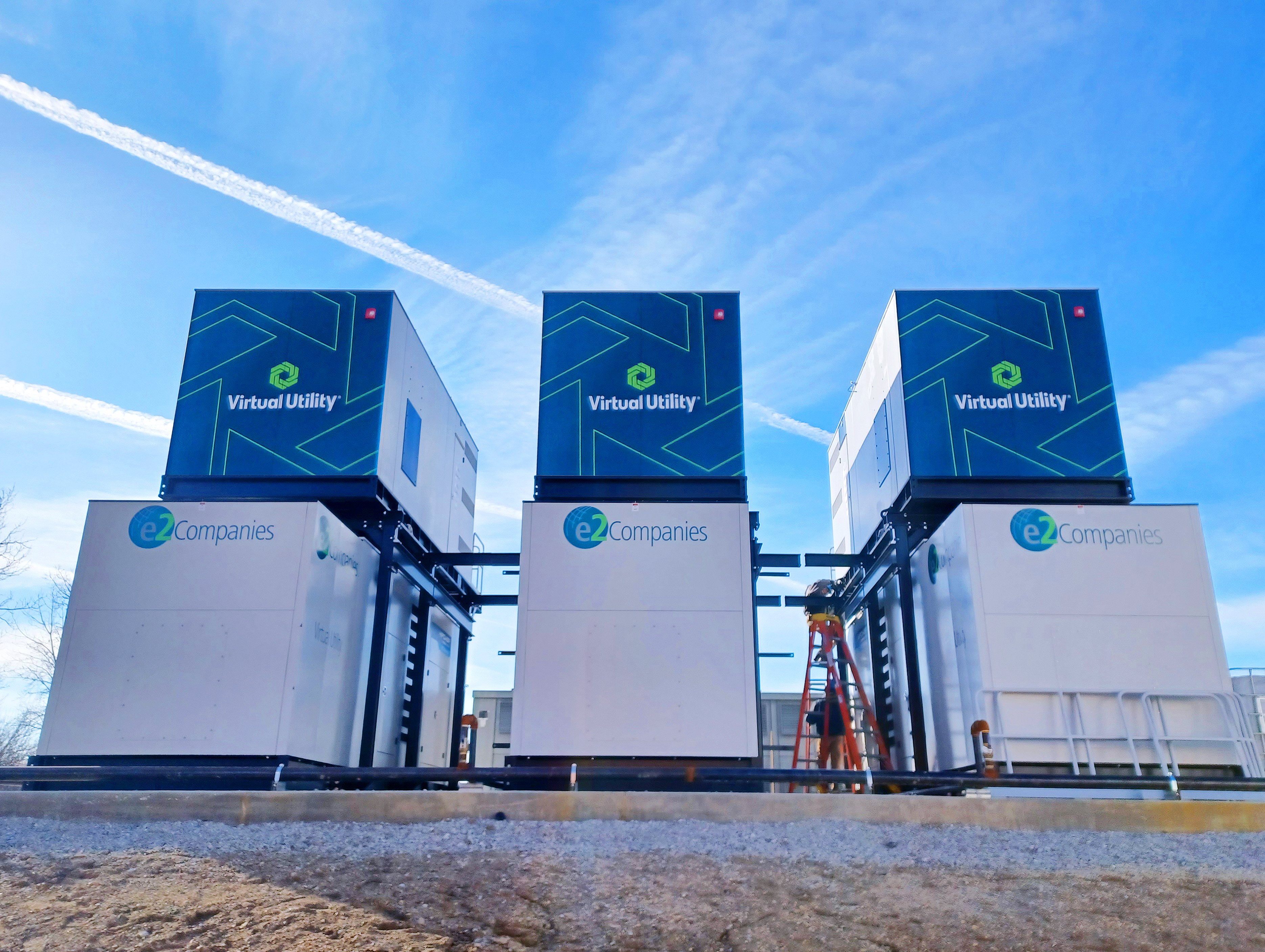
Most microgrid deployments today require a facility to coordinate multiple vendors, including a generator supplier, a BESS integrator, a controls vendor, and an engineering, procurement, and construction (EPC) firm to connect it all. Each party delivers their component with no single party owning the outcome.
When something doesn't perform, it can be difficult to troubleshoot and address the root cause.
Virtual Utility is a fully integrated, turnkey microgrid system.
At its core is the R3Di System, a patented integration of a prime-rated, rich-burn natural gas generator and a LiFePO₄ BESS in a single ETL-certified unit (UL 9540).
Every capability a microgrid requires is engineered into one platform, delivered by one team, and monitored continuously by one operations center.
That includes:
- Rich-burn natural gas generation. The R3Di System uses a rich-burn natural gas engine with three-way catalyst technology, which reduces emissions by up to 90% compared to diesel generators.
- LiFePO₄ batteries. The battery energy storage system uses LiFePO₄ batteries, which offer superior thermal stability, longer cycle life, and lower total cost of ownership than alternative chemistries.
- Conditioned power across all loads. Most standby and BESS-only systems protect mission-critical circuits. The R3Di System delivers conditioned power to the full facility load, reducing equipment damage from voltage disturbances.
- Instantaneous transfer. The battery bridges the milliseconds between a grid event and generator response, so connected loads never experience a disruption.
- No interconnection agreement required. Virtual Utility operates entirely behind the meter. Facilities avoid the permitting complexity and timeline delays that utility interconnection requires for front-of-meter systems.
- Modular deployment. The R3Di System deploys in modules starting at 1 MW that can be stacked as needed, allowing companies to scale power needs without significantly increasing their real estate footprint.
- Built-in energy management. Most microgrid deployments rely on third-party energy management systems for monitoring and optimization. Grove365 is the native control and intelligence layer for Virtual Utility®, providing 24/7 monitoring, real-time energy pricing, asset health tracking, and weather conditions. It's what transforms the R3Di System from reliable power generation into an active energy management asset.
- Environmental compliance and indemnification. e2Companies handles emissions testing, regulatory reporting, and compliance indemnification throughout the system's life.
How Do Microgrids Help Control Power and Costs?
A true microgrid system generates returns across multiple dimensions.
Demand charge reduction, demand response revenue, energy arbitrage, and avoided downtime costs all flow from the same integrated capability. Lower energy costs come from the ability to generate locally when grid prices are high and draw from the grid when they're low. This requires energy storage, real-time energy management systems, and live grid pricing intelligence working in coordination.
Investment in microgrids is growing.
Global microgrid market investment is projected to reach $55 billion by 2032, driven by grid stress, the expansion of renewable energy capacity, and the growing cost of unplanned downtime across industries, according to Allied Market Research.
Facilities that understand what a microgrid delivers and what distinguishes it from standby backup power will be positioned to capture that value.
Build the Energy Infrastructure Your Facility Needs
The term ‘microgrid’ describes a wide spectrum of systems.
A generator with a transfer switch and a fully integrated Virtual Utility® are both called microgrids in some conversations — but they perform very differently when the grid fails and a production line is running.
If your operation faces frequent outages, power quality issues, variable loads, or rising energy costs, it’s time to take control of your own power.
Schedule a consultation with us for a free energy analysis and a snapshot of how much you could save with Virtual Utility.