





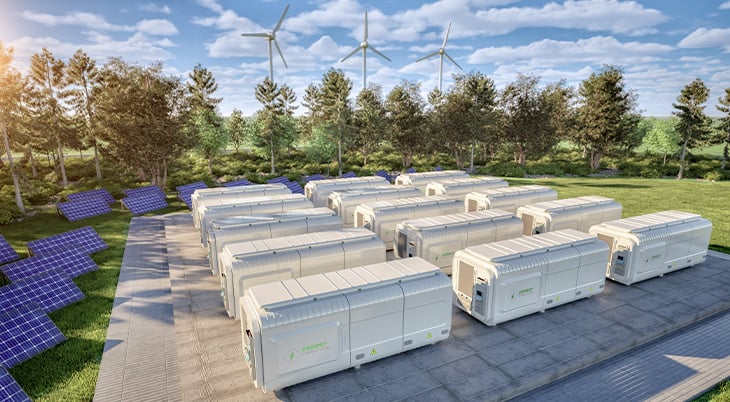
Commercial energy storage systems are transforming how businesses manage power by storing electricity during low‑demand periods and releasing it when energy prices and demand peak. e2Companies offers a unique solution through its Virtual Utility® platform, anchored by the R3Di® System and advanced Energy Storage System. These systems pair a prime‑rated natural‑gas generator with a lithium iron phosphate (LiFePO4) battery to provide instantaneous, conditioned power and long‑duration resilience. Industry data shows that lithium‑ion battery prices have fallen about 80% over the past five years, making commercial battery storage more affordable than ever, while R3Di’s LiFePO4 batteries can last up to 20 years. This combination of declining costs and long‑life technology delivers compelling financial returns, reliable backup power and a pathway to integrate renewable energy into commercial operations.
Key Takeaways
- Commercial energy storage systems efficiently manage electricity usage by storing energy during low-demand periods for use during peak demand, reducing costs.
- Battery energy storage systems (BESS) play a vital role in enhancing renewable energy utilization by storing excess energy from sources like solar and wind.
- Energy storage ensures reliable backup power during outages, aligning businesses with sustainable practices and optimizing energy consumption for cost savings.
- Implementing energy management techniques, such as charging during off-peak hours, can lead to significant operational cost reductions and enhanced efficiency.
- Future trends include advancements in battery technology and partnerships that enhance energy management capabilities, supporting sustainability and reducing carbon emissions.
Overview of Energy Storage Systems
As renewable energy sources like solar and wind become more prevalent, understanding energy storage systems is essential for optimizing their benefits.
Battery energy storage systems (BESS) play an important role in commercial systems by efficiently storing excess energy generated during low demand. This stored energy can be dispatched during peak demand, ensuring a reliable power supply while maximizing cost savings.
By integrating energy storage solutions, businesses can enhance their renewable energy utilization, reduce operational costs, and contribute to sustainability efforts. One example is the R3Di System, which combines uninterruptible on-site power generation with energy storage, further optimizing energy management for companies.
How Commercial Energy Storage Systems Work
Battery technology and architecture
Most commercial BESS platforms use lithium‑ion batteries because they offer high energy density, quick response times and declining costs. The R3Di® System uses lithium iron phosphate (LiFePO4) cells, which are safer and designed to last longer. The system packages a prime‑rated natural‑gas generator, a 1‑MW battery bank and a double‑conversion inverter within a modular unit.
This hybrid architecture ensures:
- Instantaneous full‑load pickup: The system can absorb a sudden loss of utility power and continue powering the entire site.
- Redundant operations: There is no single point of failure; the R3Di® has a redundant operating system.
- Uninterrupted power transfer: Its battery energy storage carries the full load for up to 20 minutes, giving the generator time to start and stabilize.
- Conditioned output: The R3Di® system smooths voltage sags and spikes, delivering conditioned power.
Charging and discharging
Commercial BESS typically charge from the grid during off‑peak hours or capture excess onsite solar or wind generation. The stored energy is then discharged during peak demand to reduce reliance on utility power and avoid demand charges. The R3Di® System can also operate in island mode to power critical loads independently when the grid fails, and its scalable design allows for multiple units to be stacked to meet larger capacity needs.
Benefits for Businesses
Reduced energy costs
Energy storage systems allow businesses to charge batteries when electricity prices are low and discharge them when prices spike. Peak shaving can cut demand charges by 20–40%, depending on the tariff. Lithium‑ion battery costs have fallen roughly 80% over the past five years, making these savings accessible. e2Companies further reduces costs by pairing storage with a natural‑gas generator that can operate as the primary source when grid prices surge.
Enhanced reliability and resilience
According to the Uptime Institute, 27% of data‑center operators experienced a generator‑related failure between 2020 and 2023. Commercial operations can’t afford such outages. The R3Di® System provides instantaneous backup during momentary interruptions and sustains power during prolonged outages. Its redundant operating system eliminates single points of failure, and its battery‑inverter package ensures a seamless transition to generator power.
Seamless renewable integration and sustainability
Pairing storage with solar PV or wind generation addresses the intermittency of renewables. NREL notes that falling battery prices are driving widespread adoption of solar‑plus‑storage systems, and storing excess renewable energy reduces curtailment. The R3Di® solution is designed to firm renewable output, allowing businesses to maximize onsite generation and reduce grid reliance. By using natural gas and LiFePO4 chemistry, it lowers emissions compared with diesel‑only systems while maintaining reliability.
Flexible applications
Commercial BESS provides value across industries:
- Data centers: Conditioned, uninterruptible power supports mission‑critical IT loads and prevents data loss.
- Manufacturing and industrial: Peak shaving and demand response lower operating expenses, while backup power keeps production lines running.
- Retail, healthcare and multi‑family housing: Storage ensures reliable power for refrigeration, HVAC and life‑safety systems.
- EV charging stations: R3Di® supports DC fast charging to reduce wait times and manage high EV demand.
Implementation Considerations
System sizing and duration
Energy storage systems are rated by capacity (kWh) and power (kW). e2Companies works with clients to size systems based on historical energy consumption, peak demand and outage risk. Typical commercial systems range from 500 kWh to multiple megawatt‑hours of storage, with discharge durations of 2–4 hours. The R3Di® starts at 1 MW of power and can be scaled by stacking modular units.
Maintenance and lifespan
Battery systems require routine monitoring and periodic maintenance, including cell balancing, temperature management and firmware updates. LiFePO4 batteries have a long cycle life and can deliver 10,000 cycles or up to 20 years of service. e2Companies’ Grove365® network operations center provides 24/7 monitoring and remote diagnostics to maximize uptime.
Incentives and financing
U.S. federal incentives currently offer a 30% investment tax credit (ITC) for standalone energy storage and up to 40% when projects qualify for “energy community” bonuses. Many states provide additional rebates or demand‑response payments. e2Companies can structure financing through energy‑as‑a‑service contracts or capital leases to minimize upfront costs and deliver immediate savings.
Conclusion
Declining battery costs and long‑lived LiFePO₄ technology make commercial energy storage systems a compelling investment. e2Companies’ Virtual Utility® and R3Di® System provide conditioned, onsite power that combines a natural‑gas generator, lithium iron phosphate battery and advanced controls to deliver instantaneous backup, cost savings and renewable integration. With benefits ranging from demand‑charge reduction to enhanced sustainability, commercial battery energy storage systems are essential for businesses seeking reliable, flexible and future‑proof power.
Jump to Topic
Frequently Asked Questions
How long do commercial battery systems last?

Lithium‑ion storage systems typically last 10–15 years, but e2Companies’ LiFePO4 batteries are designed to operate for up to 20 years. Proper maintenance and conservative depth‑of‑discharge can extend lifespan further.
What makes e2Companies’ R3Di® System different from a standard UPS?
Unlike a traditional uninterruptible power supply, R3Di® is a prime‑rated power plant that provides instantaneous full‑load pickup and long‑duration backup. Its battery carries the site’s load for up to 20 minutes while the natural‑gas generator starts, and the system smooths voltage sags and spikes. It can also serve as the primary power source, reducing grid dependence and enabling demand‑response participation.
Can storage systems earn revenue through grid services?
Yes. Commercial BESS can participate in demand‑response programs, provide frequency regulation and capture peak pricing arbitrage. e2Companies’ Virtual Utility® monitors market conditions and dispatches onsite assets to maximize these revenue streams while maintaining power quality.
How do I calculate the ROI of an energy storage project?
Our Virtual Utility ROI calculator models uptime value, demand‑charge reduction, tax incentives and power‑factor benefits. Typical payback periods range from 5–10 years, depending on facility size, energy rates and outage costs.
How does energy storage integrate with solar?
Storage absorbs excess solar generation during the day and discharges it after sunset, allowing businesses to increase self‑consumption and reduce grid purchases. The R3Di® platform can firm renewable output and even island a facility during grid disturbances.