





Power redundancy ensures that your organization continues to operate when the utility grid fails or voltage fluctuates. In data‑intensive sectors, even brief outages can corrupt critical data, cause hardware failures and erode customer trust. At e2Companies, our Virtual Utility® platform and R3Di® System deliver onsite, utility‑grade power with fast‑response battery storage and conditioned generation to keep your data center or industrial facility online through any disturbance. This section explains how to design an effective power‑redundancy plan, why it matters and how emerging technologies make redundancy more efficient and sustainable.
Key Takeaways
- Power redundancy is a proactive strategy to ensure business continuity during power outages, protecting sensitive data and supporting operations that run around the clock.
- Common redundancy models include N, N+1, 2N and 2N+1; each adds extra capacity or duplicate systems to tolerate component failures. Higher levels (2N and 2N+1) provide full duplication of power and cooling systems, while N+1 redundancy adds one additional component beyond the required capacity for a more cost‑effective solution.
- The reliability of the utility grid is eroding due to increased penetration of intermittent renewables, aging transmission infrastructure, extreme weather and geopolitical tensions. These external factors make onsite power redundancy essential.
- According to the Uptime Institute’s outage analysis, more than a quarter (27%) of data‑center operators experienced a generator‑related outage from 2020-2023. Though overall outages are becoming less frequent, power remains the leading cause of impactful outages, and human error contributes to nearly 40% of major incidents.
- Redundancy strategies should integrate backup generators, UPS systems, battery energy storage and renewable sources while incorporating regular maintenance and testing to reduce unplanned failures.
Understanding Power Redundancy
Power redundancy refers to building multiple, independent ways to supply electricity so that if one component fails, another immediately takes over. In its simplest form (N architecture), a facility relies on a single set of components – such as one uninterruptible power supply (UPS) and generator — to supply the full IT load. This configuration has no failover capability and thus carries high risk.
To reduce this risk, operators add extra capacity or duplicate entire systems:
N+1 Redundancy
An N+1 redundancy architecture includes one additional UPS module, generator or cooling unit beyond what’s required to support the full load. If any single component fails, the spare takes over and the system continues operating. Because it offers a balance between cost and reliability, N+1 is widely used for UPS systems, cooling redundancy and backup generators. e2Companies’ R3Di® System can operate as the N+1 resource, providing conditioned power and seamless integration with the grid to minimize downtime.
2N and 2N+1 Redundancy
In a 2N configuration, the entire power path—including UPS modules, generators, switchgear and distribution—is duplicated. Each path can handle 100 % of the load, so maintenance or component failure on one side has no impact on operations. 2N+1 redundancy takes this one step further by adding a spare component to each leg, ensuring fault tolerance even during maintenance. These configurations deliver the highest uptime and are common in Tier 4 data centers.
N (No Redundancy)
The N architecture uses the minimum number of components to run the facility. It may be appropriate for non‑critical applications or facilities with high risk tolerance, but any single component failure can cause a total outage. For mission‑critical operations, such as data centers, healthcare or manufacturing, N alone is insufficient.
Why Power Redundancy Matters
Safeguarding Business Operations
For organizations processing large volumes of critical data—from hospitals and financial institutions to colocation facilities—power interruptions can have severe consequences. The Uptime Institute reports that power remains the leading cause of impactful outages. Generator failures are still common; 27% of data‑center operators suffered a generator‑related outage between 2020 and 2023. Onsite redundancy protects against utility events and ensures that service‑level agreements (SLAs) are met.
Adapting to a Less‑Reliable Grid
Grid reliability is being challenged by four factors: increasing adoption of intermittent renewable energy, aging transmission systems, more frequent extreme weather and geopolitical instability. These pressures are driving utilities to implement rolling blackouts, load‑shedding and brownouts. Onsite redundancy with a hybrid of prime power, battery storage and natural gas generation mitigates these risks.
Meeting Sustainability Goals
Traditional diesel generators emit significant amounts of carbon dioxide, nitrogen oxides and sulfur oxides; many jurisdictions limit their use to about 100 hours at full load per year. e2Companies’ R3Di® System uses high‑efficiency natural‑gas generators and long‑life battery storage to provide reliable power with a lower carbon footprint. The system can also integrate with renewable energy to create a cleaner redundancy architecture.
Reducing Human Error
The Uptime Institute’s 2025 outage analysis notes that nearly 40% of organizations experienced a major outage caused by human error in the past three years; 85% of those incidents were due to failure to follow procedures. Automating load transfers, fuel management and monitoring through e2Companies’ Grove365® software reduces reliance on manual processes and helps avoid these pitfalls.
Choosing the Right Redundancy Model
Selecting the appropriate redundancy level involves balancing risk tolerance, budget, regulatory requirements and the criticality of your applications. The Uptime Institute’s Tier Classification defines four tiers of data‑center reliability:
- Tier I (N): Basic capacity without redundant components, suitable for small businesses.
- Tier II (N+1): Redundant components but single power and cooling paths.
- Tier III (2N): Concurrently maintainable with dual power paths, allowing maintenance without downtime.
- Tier IV (2N+1): Fault tolerant, providing full duplication plus a spare component for maximum availability.
For data centers, e2Companies recommends at least an N+1 configuration; mission‑critical facilities may require 2N or 2N+1 designs for full fault tolerance. Our microgrid solutions integrate the R3Di® System with battery storage and renewable energy, enabling scalable redundancy to match your business needs.
Business Requirements and Geographical Factors
When designing redundancy, evaluate the impact of downtime on your business operations and regulatory obligations. Healthcare and financial institutions often require continuous power, while other sectors can tolerate brief interruptions. Geographic factors—such as exposure to hurricanes, wildfires or unstable grids—may necessitate more robust systems. Organizations operating in regions with frequent outages should consider duplicating both power and cooling systems and storing additional fuel onsite.
Budget Considerations
Higher redundancy levels require more infrastructure and capital. N+1 systems provide a cost‑effective compromise for many enterprises, while 2N and 2N+1 architectures deliver greater reliability at higher cost. e2Companies helps clients analyze lifecycle costs, including fuel efficiency, maintenance and tax incentives, to determine the most economical solution.
Innovations Enhancing Power Redundancy
Renewable Energy Integration
Integrating solar or wind energy with battery storage reduces dependence on fossil fuels and protects against grid volatility. e2Companies’ Virtual Utility allows renewable sources to charge the R3Di® battery and displace generator runtime without sacrificing reliability. This approach aligns with ESG initiatives and qualifies for tax credits and incentives.
AI‑Powered Monitoring and Predictive Maintenance
Modern redundancy frameworks rely on continuous monitoring to prevent failures. Sensors track UPS units, generators and batteries, while AI analyzes performance trends. The Uptime Institute recommends monthly building‑load tests and annual full “pull‑the‑plug” tests to uncover hidden issues. Grove365® automates these diagnostics, alerts operators to anomalies and schedules maintenance before problems cause outages.
Battery Energy Storage Systems
Battery Energy Storage Systems (BESS) provide instant backup power and smooth load transitions. Lithium‑iron‑phosphate batteries, as used in the R3Di® System, can deliver thousands of cycles and operate continuously, unlike traditional lead‑acid UPS batteries. Pairing BESS with natural‑gas generation ensures continuous power while reducing emissions.
Data Center Power Redundancy
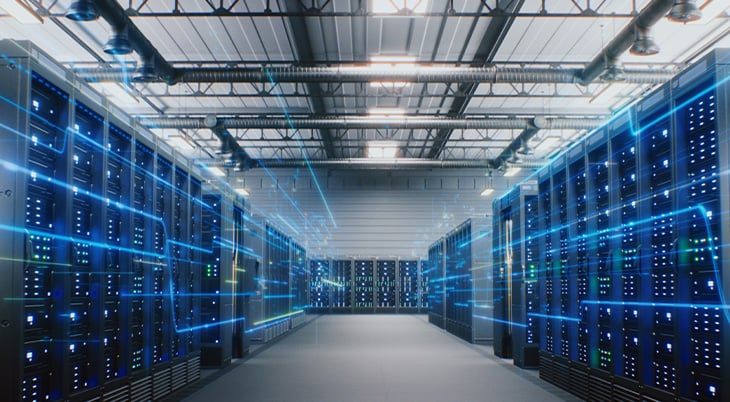
Data centers are some of the most energy‑intensive facilities in the world. They require continuous, high‑quality electricity for servers, networking equipment and cooling systems. The stakes are rising: a 2025 U.S. Department of Energy report warns that power‑plant retirements and surging load could increase the risk of grid outages 100‑fold by 2030. At the same time, many existing diesel generators are nearing the end of their service lives and lack the capacity to meet escalating demand—especially as AI cooling consumes 40% of data‑center power. Without an effective data center power‑redundancy strategy, even short disturbances can corrupt sensitive data and interrupt mission‑critical applications.
Operational Continuity and Customer Trust
Reliable power is directly linked to data center reliability and business continuity. Unplanned outages damage customer confidence, breach service level agreements and can result in data loss. By adopting a redundancy model that matches your risk tolerance and by leveraging real‑time monitoring, you demonstrate a commitment to uninterrupted service and build long‑term customer trust.
Conclusion
Power redundancy isn’t just about adding more hardware—it’s about designing a resilient architecture that aligns with your risk tolerance, sustainability goals and business objectives. By combining N+1 or 2N redundancy with renewable integration, AI‑powered monitoring and high‑efficiency fuel sources, organizations can ensure uninterrupted operations even as the grid becomes less reliable. e2Companies’ Virtual Utility® and R3Di® System provide the foundation for modern redundancy—delivering conditioned, onsite power that keeps your data center running and your customers confident, no matter what happens on the grid.
Jump to Topic
Frequently Asked Questions
How does power redundancy improve data‑center reliability?

Redundancy ensures that if one component—such as a UPS module, generator or switchgear—fails, another immediately takes over. According to Uptime Institute, power is still the leading cause of impactful data‑center outages, and 27% of operators experienced generator‑related failures. Implementing N+1 or 2N redundancy with integrated monitoring reduces the risk of downtime and preserves data integrity.
What are the key differences between N+1 and 2N redundancy?
In an N+1 configuration, one additional component provides failover protection; the system can handle a single failure without affecting operations. 2N redundancy duplicates the entire power path, enabling concurrent maintenance and tolerating multiple failures. 2N+1 adds a spare to each leg for maximum fault tolerance. e2Companies helps determine which architecture aligns with your budget and risk profile.
How often should backup power systems be tested?
The Uptime Institute recommends performing a full building‑load “pull‑the‑plug” test annually and a shorter building‑load test monthly. These tests verify that generators, UPS systems and transfer switches operate correctly under real‑world conditions. Grove365® scheduling automates testing intervals and logs results for compliance and audits.
What role does renewable energy play in power‑redundancy strategies?
Renewable energy reduces reliance on the grid and lowers operating costs. Solar panels or wind turbines can charge onsite batteries and supply power when the grid is unstable. Combining renewables with the R3Di® System allows facilities to maintain reliable, low‑carbon backup power while participating in demand response programs and earning incentives.
How does e2Companies differentiate its power‑redundancy solutions?
e2Companies’ Virtual Utility® integrates natural‑gas generation, battery storage and AI‑driven controls into a single platform. Unlike traditional standby generators, the R3Di® System delivers continuous power, supports variable loads and conditions voltage to protect sensitive IT equipment. Grove365® monitors the system 24/7, predicts maintenance needs and dispatches the most cost‑effective power source, helping clients reduce costs and emissions.