





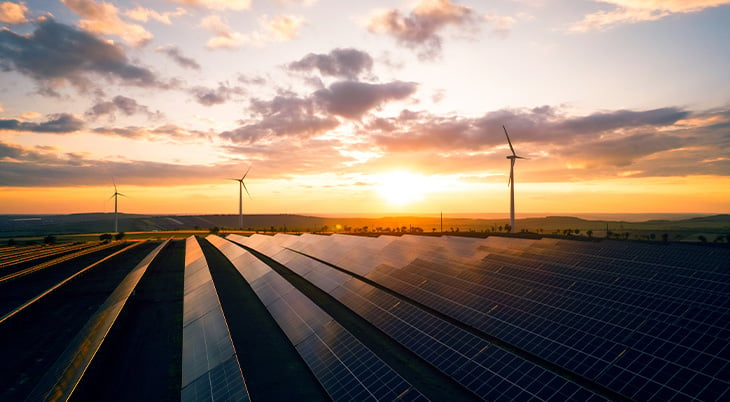
The reliability of solar energy systems is defined by the ability of photovoltaic (PV) systems to produce dependable, long‑term power at a predictable cost. For commercial and industrial facilities, dependable solar power means more than just sunshine. It encompasses module durability, system design, energy storage and seamless integration with the electric grid. Solar panels convert sunlight into direct current (DC) electricity, which inverters transform into usable alternating current for your facility. e2Companies’ Virtual Utility® and R3Di® System deliver conditioned onsite power and intelligent energy management that integrates with renewable energy sources, making solar and wind energy viable options.
These systems use high‑performance lithium‑iron‑phosphate batteries and natural gas generators to create a microgrid, ensuring renewable energy remains reliable even during grid disturbances or high demand periods.
Key Takeaways
- Commercial solar panels are dependable. The U.S. National Renewable Energy Laboratory long‑term PV reliability project found solar panels installed between 2000 and 2015 experienced a median failure rate of just 5 out of 10,000 modules per year (0.05 %) and that modern modules typically degrade less than 1 % per year. With 25‑ to 30‑year performance warranties, a well‑engineered solar system can provide stable energy for decades.
- Solar systems convert sunlight into usable electricity. Photovoltaic panels generate direct current (DC) power, which inverters convert into alternating current (AC) suitable for your facility and the electric grid. Coupling PV panels with battery storage ensures a steady electricity supply during cloudy periods or at night and decreases dependence on conventional fossil‑fuel generation.
- Capacity factors and output are predictable. NREL reports that commercial PV systems achieve an average capacity factor of about 15.8 %, with ranges from 12.7% to 19.8% depending on location. Understanding these factors allows businesses to model energy output and financial returns accurately.
- Battery energy storage improves reliability. By storing excess solar generated electricity, energy storage systems ensure solar power is available during cloudy periods or peak demand. e2Companies’ R3Di® solution combines a prime‑rated natural gas generator with lithium‑iron‑phosphate (LiFePO4) battery storage to provide instantaneous full‑load pickup and sustain critical loads through long‑duration outages.
- Solar incentives lower project costs. The current federal Investment Tax Credit (ITC) and Production Tax Credit (PTC) provide a 30–50% cost offset for solar and storage projects, with additional 10% bonus credits for domestic content and energy‑community projects. State programs like NY‑Sun, California’s Self‑Generation Incentive Program (SGIP), and Illinois Shines offer further rebates and grants.
- Commercial microgrids enhance resilience and sustainability. Integrating solar with on‑site generation, battery storage, and grid services with Virtual Utility® enables facilities to reduce energy costs, participate in demand‑response programs, and reduce reliance on fossil fuels.
Understanding Solar Power Reliability for Commercial Users
For commercial energy users, the dependability of solar power systems hinges on module durability, predictable output and robust system design. NREL research shows PV modules manufactured after 2000 have failure rates around 0.05 % per year and typically degrade less than 1% annually, meaning most panels will still produce 80–90% of their original output after 25 years. These modules also come with performance warranties of 25 to 30 years, offering commercial buyers long‑term assurance.
Reliability also depends on capacity factor, or the ratio of actual renewable energy produced compared to the maximum possible. According to NREL’s Annual Technology Baseline, commercial PV systems in the United States average a 15.8% capacity factor, with higher‑resource sites achieving up to 19.8% atb. Knowing your site’s resource class helps in estimating output, sizing battery storage, and planning solar energy systems for seasonal variability. On‑site monitoring, part of e2Companies’ Grove365™ network operations center, provides real‑time data to verify performance and identify potential issues before they affect operations.
Environmental and Operational Durability
Commercial PV modules are engineered to withstand harsh environments, including hail, high winds, and extreme temperatures. High‑quality frames and tempered glass protect against physical damage, while protective encapsulants mitigate degradation from ultraviolet radiation. Still, equipment failures—such as hotspot formation, inverter failures, or wiring faults—can occur. Regular inspections, infrared scans, and real‑time monitoring help detect anomalies early.
Battery technology also affects reliability. e2Companies uses LiFePO4 batteries within its R3Di® System, which offer greater thermal stability and lifespan compared to conventional lithium‑ion chemistries. These batteries can last up to 20 years and provide enough reserve capacity to carry the full site load for roughly 20 minutes while the integrated generator starts and assumes the load. This design eliminates single points of failure, delivering conditioned power even during voltage sags and spikes.
The Role of Battery Energy Storage
Solar power is intermittent; clouds, shading, and nighttime reduce output. Energy storage systems solve this problem by capturing excess solar production and releasing it when needed. The R3Di® System integrates a prime‑rated natural gas generator with LiFePO4 battery storage, delivering instantaneous full‑load pickup and continuous power during extended outages. The batteries smooth power fluctuations and enable peak‑shaving and demand response participation, lowering energy costs and reducing reliance on the grid.
e2Companies’ Virtual Utility® platform orchestrates these components. Grove365™ monitors asset utilization, weather patterns, grid conditions, and market prices, automatically dispatching the most cost‑effective energy source. The system pairs seamlessly with rooftop PV and wind turbines to firm renewable output, supporting EV charging and critical loads. This architecture ensures power quality, mitigates voltage sags, and provides seamless transfer during grid outages.
Incentives, Financing and Market Trends
Many commercial solar projects benefit from federal and state incentives. The Investment Tax Credit (ITC) offers a 30% tax credit for solar and qualified energy storage projects, increasing to 40% or 50% with domestic content and energy‑community bonuses. The credit is available for projects placed in service before December 31, 2027, or those that begin construction before June 30, 2026. Additional incentives include the Production Tax Credit (PTC), which pays per kilowatt‑hour of electricity generated, and state programs like NY‑Sun, California’s Self‑Generation Incentive Program, and Illinois Shines that offer rebates or performance‑based payments. C‑PACE financing allows property owners to finance solar and battery systems through a property tax assessment, reducing upfront costs and improving cash flow.
Pairing solar with battery storage qualifies the entire system for the ITC, enhancing project economics. According to e2Companies, microgrid solutions like the R3Di® and Grove365™ are attractive to investors because they deliver long‑term resilience and cost savings by reducing demand charges and enabling participation in ancillary services markets.
As more states enact clean‑energy mandates and adopt renewable portfolio standards, demand for reliable commercial solar and storage solutions is expected to grow.
Conclusion
Reliable solar power for commercial applications depends on high‑quality solar panels, accurate output forecasting, and robust battery storage. With low failure rates, PV systems provide dependable renewable energy for decades. By integrating solar with battery energy storage and natural‑gas generation through e2Companies’ R3Di® System and Virtual Utility®, businesses can ensure a steady supply of renewable power, reduce energy costs, and meet sustainability goals. Coupled with federal and state incentives and financing options, solar generated electricity and storage can be practical, scalable solutions for commercial operations seeking to reduce their dependence on fossil fuels without compromising reliability or power quality.
Jump to Topic
Frequently Asked Questions
How reliable are commercial solar panels?

Modern PV modules are highly reliable. NREL’s research indicates a median failure rate of only 0.05 % per year for systems installed between 2000 and 2015, and panels typically degrade less than 1 % annually. High‑quality modules backed by 25‑ to 30‑year warranties ensure long‑term performance for commercial operations.
What is a capacity factor, and why does it matter for solar projects?
The capacity factor measures how much electricity a system of solar panels produces compared to its maximum possible output over time. For commercial PV in the U.S., the average capacity factor is about 15.8% with ranges up to 19.8% atb. Understanding your site’s capacity factor helps estimate annual energy production, determine battery sizing, and evaluate return on investment.
How does battery energy storage enhance the dependability of solar power?
Battery storage captures excess solar production and releases it when generation dips or demand spikes. e2Companies’ R3Di® System uses LiFePO4 batteries to provide immediate backup power and support peak shaving, enabling seamless transitions during grid outages. This combination reduces reliance on diesel backup generators, lowers operating costs, and ensures consistent power quality.
What incentives are available for commercial solar panels and storage projects?
The federal Investment Tax Credit (ITC) provides a 30% credit on project costs, with up to 50% available for projects meeting domestic content and energy‑community requirements. The Production Tax Credit (PTC) pays per kilowatt‑hour generated. Many states offer additional rebates or grants, and C‑PACE financing helps commercial property owners finance solar and battery systems through long‑term property assessments. Pairing solar with battery storage qualifies the entire system for the ITC, improving project economics.
How does e2Companies’ Virtual Utility® make solar panels more reliable?
Industries with limited grid access or critical uptime requirements, including data centers, manufacturing, oil and gas, and healthcare, rely on prime-rated generators to ensure operational continuity and compliance.
Are solar panels and battery energy storage systems environmentally friendly?
With the R3Di system, you can take advantage of renewable energy sources without compromising reliability. Our team can work with you to identify, contract and manage renewable energy projects or negotiate power purchase agreements for greater flexibility without upfront capital costs.
We can also help you define realistic ESG goals and measure progress so you see a return on your investment not only for your company, but for society.