




Many CFOs believe that achieving net-zero targets and reducing operating costs are two conflicting goals. It’s time to challenge that assumption.
Research from the International Energy Agency finds that clean energy technologies make energy more affordable over time, and tax incentives minimize the initial investment.
For instance, a mid-sized industrial facility working with e2Companies eliminated the majority of its peak load power consumption, cutting PJM capacity charges by over 99% and saving more than $180,000 annually with on-site generation and storage system that also reduced its carbon emissions profile.
Oxford University research projects that a fully decarbonized global energy system could save more than $12 trillion by 2050. More than 6,600 companies have now set net-zero emissions goals, many of them motivated as much by energy cost exposure as by ESG commitments.
What Is a Net-Zero Energy Building?
A zero-net energy building produces as much energy as it consumes over the course of a year.
Facility and operations leaders achieve this balance through a combination of energy efficiency improvements that reduce energy demand and provide renewable energy generation that offsets what the building still uses.
Most net-zero buildings remain connected to the grid, exporting excess energy during periods of high generation and drawing from the grid when renewable output drops. The energy balance is measured annually instead of in real-time.
A related but more stringent standard is net-zero operational carbon, which focuses specifically on eliminating carbon emissions from day-to-day building operations, such as heating and cooling.
Nearly zero-energy buildings (a European standard) apply a similar framework, aiming for high energy performance with a minimal remaining demand met by renewables.
How Do Net-Zero Buildings Work?

Traditionally, net-zero energy buildings start with energy efficient building design.
High-performance insulation minimizes heating and cooling losses. Energy-efficient windows reduce thermal transfer. Passive solar design, or orienting windows to naturally capture or block the sun's energy, can significantly reduce heating and cooling costs, which account for as much as 40% of a commercial building’s load, according to the U.S. Department of Energy.
Operators of existing commercial buildings focus on what they can control, including upgrading lighting to more energy-efficient bulbs, using a building management system (BMS) to adjust lighting and HVAC based on occupancy, or adding materials with more insulation or ventilation.
Standards like ENERGY STAR, Passive House, LEED certification, and ASHRAE Standard 228 provide frameworks for measuring and validating zero net energy building performance. The International Living Future Institute offers Net-Zero Energy Building certification for projects that demonstrate a full annual energy balance.
Scheduling operations more efficiently, properly maintaining equipment, and performing energy audits to determine the source of the greatest energy losses can also help reduce load.
On-site renewable power sources, such as solar panels, wind turbines, or geothermal heating systems, generate power without adding carbon emissions. The challenge with all renewable sources is intermittency. Solar panels produce power only when the sun shines. Wind turbines generate only when the wind blows. This variability creates reliability gaps that prevent facilities from fully committing to renewable investments.
Wind and solar sources together contributed more to the US power generation mix in 2025 than ever before, yet still only accounted for 17%, according to the Energy Information Administration.
Fortunately, with clean on-site generation and energy storage through microgrid solutions like Virtual UtilityⓇ, meeting carbon reduction targets doesn’t have to mean using less power.
How Do Microgrids Make Renewable Energy Sources More Reliable?
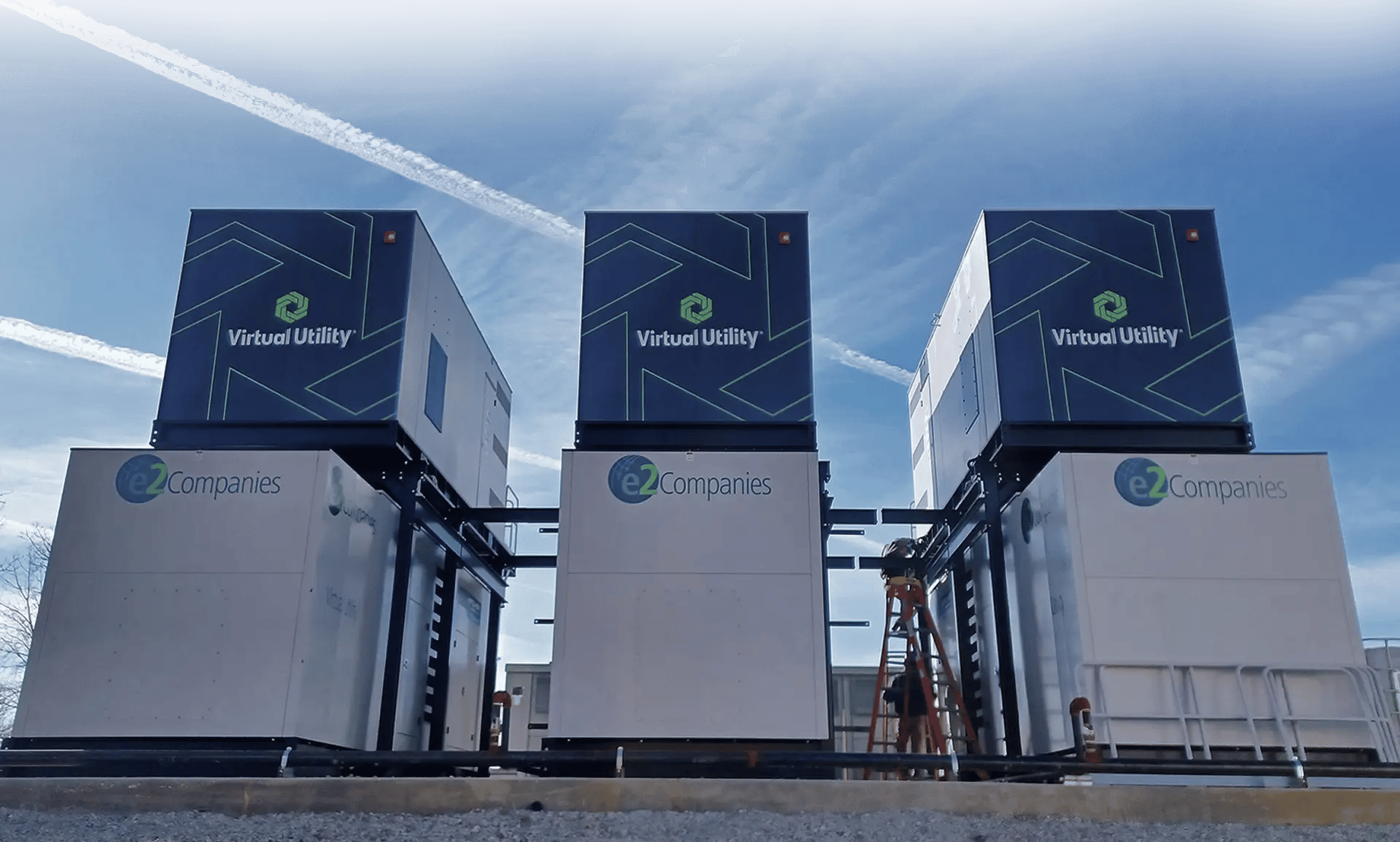
Microgrids are on-site solutions that combine distributed energy resources (such as solar or wind power), energy storage, and intelligent controls to supply power to loads that are connected to the grid or operating independently from it.
Virtual Utility is one example of a system designed to improve power reliability and power quality while integrating with renewable sources.
The R3DiⓇ System brings power generation and battery energy storage into a single system that can connect to any energy source behind or in front of the meter. That includes the utility grid, natural gas, solar panels, wind turbines, or hydrogen installations.
When renewable sources are producing at full output, the system routes that energy to the facility's loads first, charges the battery storage system with the surplus, and exports any remaining excess to the grid. When solar output drops, it draws from its battery storage first, then from natural gas generation if needed, without any interruption to facility operations.
At the same time, it converts alternating current (AC) to direct current (DC) power, smoothing out voltage dips or spikes so the facility receives conditioned power. This prevents any disruption in operations or damage to sensitive equipment that can occur from an unpredictable power source.
For instance, Oil Creek Plastics, a pipe and tubing manufacturer in Pennsylvania, is installing a integrated a 2MW R3Di System with a 1,000 kW rooftop PV array, increasing the reliability of their solar investment while maintaining power quality.
“The system eliminates outages and improves the efficiency of our machines while also allowing us to reduce costs and carbon emissions,” Oil Creek Plastics Owner CJ Kirvan said.
e2Companies recently completed a similar project for the Erie County Public Works Department in Western New York with a focus on increasing power reliability while incorporating rooftop solar panels.
To dispatch power from the R3Di System at the right times, e2’s Virtual Utility relies on AI-powered energy management software known as Grove365Ⓡ. The software collects performance data across a facility’s infrastructure and uses predictive algorithms to forecast demand and dispatch power at the right times. For instance, if the public grid fails or energy prices rise above a certain threshold, the software will deploy the R3Di System for on-site power.
The software is monitored by a network operations center staffed with experienced professionals 24 hours a day, seven days a week. This team works with facilities leaders to understand their goals and develop a strategy for using on-site power at the right time.
What Is the ROI of a Microgrid?
The conversation about net-zero is often framed as a long-horizon sustainability commitment, but the financial reality is more immediate.
For most commercial and industrial facilities, demand-based charges drive the largest portion of the utility bill. These charges can represent 30 to 50 percent of total monthly costs, and they’re often calculated during a few specific windows of the entire year.
On-site generation and storage solutions allow facilities to reduce utility consumption during times of anticipated demand and earn additional revenue by participating in demand response programs.
In one example, a Florida stadium is projected to save approximately $400,000 per year by reducing demand charges while earning more than $3 million annually in financial incentives.
Combined with tax incentives, this offsets many of the initial costs of Virtual Utility, allowing the stadium to achieve a return on its investment of nearly $1 million within the second year.
Tax credits for energy storage systems cover 30% of the project cost, with additional 10% bonuses available for projects installed in areas with high unemployment or brownfields.
An additional 10% bonus is available for projects that have more than 40% of their components produced in the United States.
Bonus depreciation also significantly reduces the cost of the investment in its first year, saving $1 million or more for some projects.
While tax credits remain available for energy storage systems under construction by 2033, the timeline is shorter for solar and wind projects, ending in December 2027.
That means now is the time to act if your facility wants to incorporate renewable sources into your project.
How Can You Get Started With Your Facility's Net-Zero Strategy?
As utility costs continue to rise and the grid faces significant reliability challenges, investing in cleaner on-site power has clear financial benefits as well as environmental ones.
Our R3Di System reduces carbon emissions by up to 99% compared to diesel generators, and there are cost-effective options to implement it.
While many companies commit to owning the system outright, others lease it through an energy services agreement or rent it for a shorter period of time with the option to buy later.
The first step is to schedule a short call to see how much you could potentially save with Virtual Utility. Then we can discuss deployment timelines and financing options.